Why Hotel Profit Margins Are Shrinking

Rising revenue in 2026 often masks a deeper crisis of shrinking profit margins across the hospitality sector. Strategic cost management and a focus on flow-through are essential to protecting the bottom line in this high-cost environment.
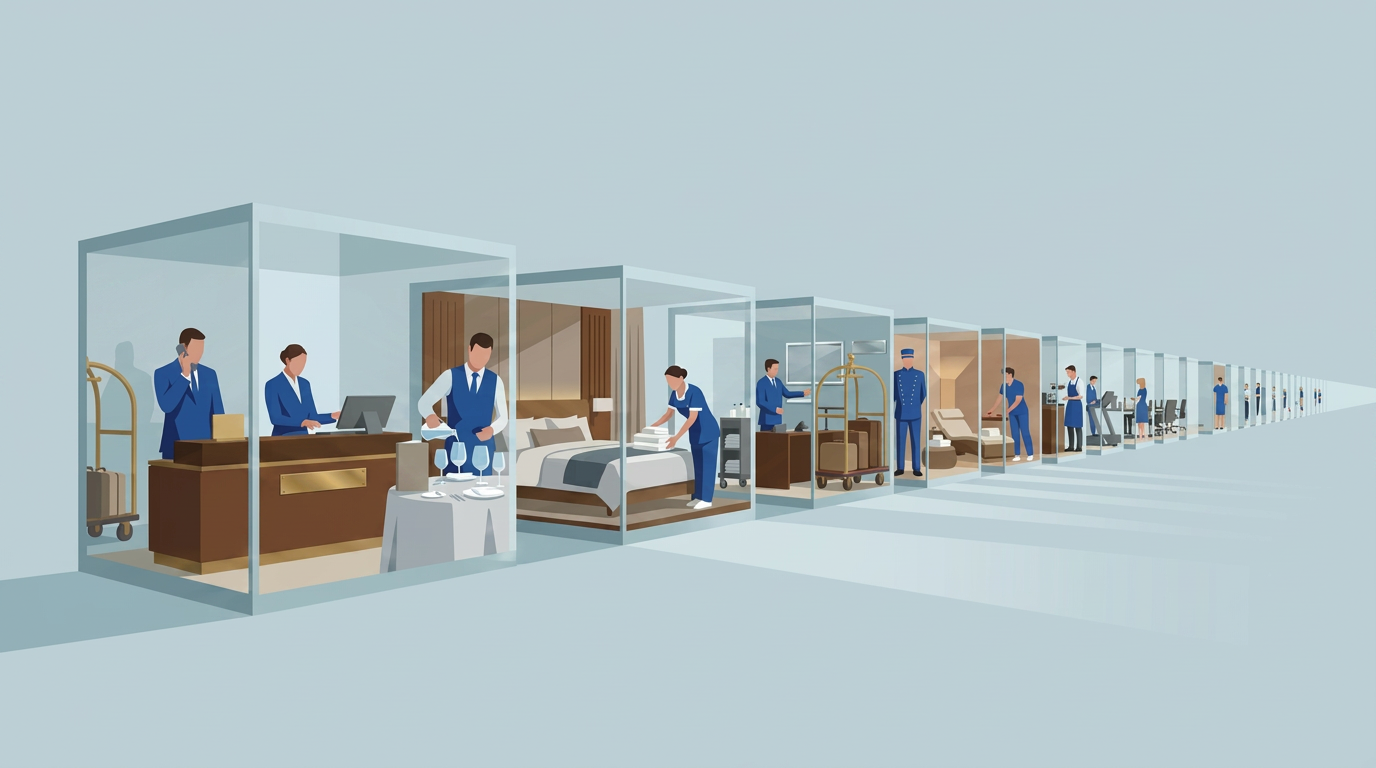
Hotel operations and staffing structures illustrating how rising labor costs are reshaping hotel profitability and operating performance in 2026
In the current hospitality landscape, a significant increase in top-line revenue no longer guarantees a healthier bottom line. Many operators are finding that while their rooms are full and rates are high, their actual profit margins are noticeably contracting. This phenomenon, where revenue growth fails to translate into margin expansion, represents one of the most pressing financial challenges of 2026.

According to City Shift Finance, while average daily rates have seen a modest increase of approximately 2%, operational expenses have climbed by roughly 4% in the same period. This imbalance creates a situation where hotels are essentially working harder to earn less. The traditional relationship between volume and profit has been disrupted by a complex array of rising costs that outpace inflationary adjustments in pricing.

The Margin Compression Trap

The primary driver of this compression is the escalating cost of doing business. Beyond labor, which remains the largest expense, hotels are facing higher costs for utilities, insurance, and supply chain logistics. These are not variable costs that can be easily scaled back during quieter periods. Instead, they have become fixed burdens that eat into every dollar of revenue generated.

abstract blue background with subtle flowing forms representing hotel labor cost pressure, workforce misalignment and operational inefficiency across hospitality operations
Practice

Learn more

When revenue grows at approximately 2% but expenses rise at around 4%, the resulting "negative flow-through" can devastate a property's financial health. For a finance professional, the focus must shift from simply driving more volume to maximizing the profitability of every guest stay. This requires a granular understanding of where every cent is being spent and identifying areas where efficiency can be improved without compromising the guest experience.

Optimizing the Profit Pipeline

To break free from the margin compression trap, the focus must be on enhancing the efficiency of the revenue-to-profit pipeline.
  • Process Evaluation: Conduct a rigorous review of all operational processes to identify waste and redundancy across departments.
  • F&B Optimization: Streamline menus and optimize inventory management to reduce the high costs associated with food and beverage operations.
  • Energy Efficiency: Implement energy-saving initiatives to mitigate the impact of rising utility prices and provide long-term relief for the bottom line.
  • Strategic Pricing: Ensure that rates reflect market demand while also covering the increasing cost of service delivery through dynamic pricing models.
  • Operational Discipline: Hold every department accountable for financial performance with a clear focus on maintaining healthy profit margins.

Protecting the Bottom Line

Protecting margins in 2026 requires a combination of strategic pricing and disciplined cost management. Hotels that successfully implement rigorous cost-control measures are approximately 15% more likely to maintain stable profit levels in a high-inflation environment. This discipline is not about making broad cuts but about making smart, data-backed decisions that protect the long-term viability of the business.

The Path Forward

Profitability in 2026 depends on managing costs with the same intensity as driving revenue. By focusing on operational efficiency and strategic financial management, hotels can navigate this challenging environment and ensure their long-term success.

The most resilient businesses will be those that recognize this shift and adapt their strategies accordingly.
Hotel Labor Costs: Reshaping 2026 Profitability ➜ Why Hotel Profit Margins Are Shrinking ➜ The Hotel Labor Productivity Gap ➜ Luxury Hotel Guest Expectations ➜ Effective Hotel Cost Control ➜ The Growing Hotel Performance Divide ➜ Optimizing Hotel Workforce Structure ➜ Hotel Operational Discipline ➜ Occupancy vs. Margins ➜ 2026 Hospitality Financial Outlook ➜
Featured Podcasts
Hotel Workforce Optimization Insights illustration showing spheres moving unevenly along a slope, representing misaligned labor deployment

Hotel workforce optimization produces margin and service gains when labor is deployed against actual guest demand rather than historical scheduling assumptions.

FP&A consulting for hospitality concept showing hotel front desk with one active staff member and one idle employee as a guest waits with luggage

Hospitality financial planning misses persist even as targets are revised, because the issue is often the assumptions, not execution.

blue arrows rising upward representing increasing hotel F&B labor costs

F&B labour cost keeps rising because the ratio is addressed as a cost problem when it is often driven by revenue limits.

Connect with our team

Contact us

Contact us

Contact

Sign up to download

Topics of Interest: