The Growing Hotel Performance Divide

The performance gap between luxury and economy hotels is widening in 2026, driven by diverging guest behaviors and varying operational pressures. Understanding this divide is essential for investors and operators navigating a fragmented market.
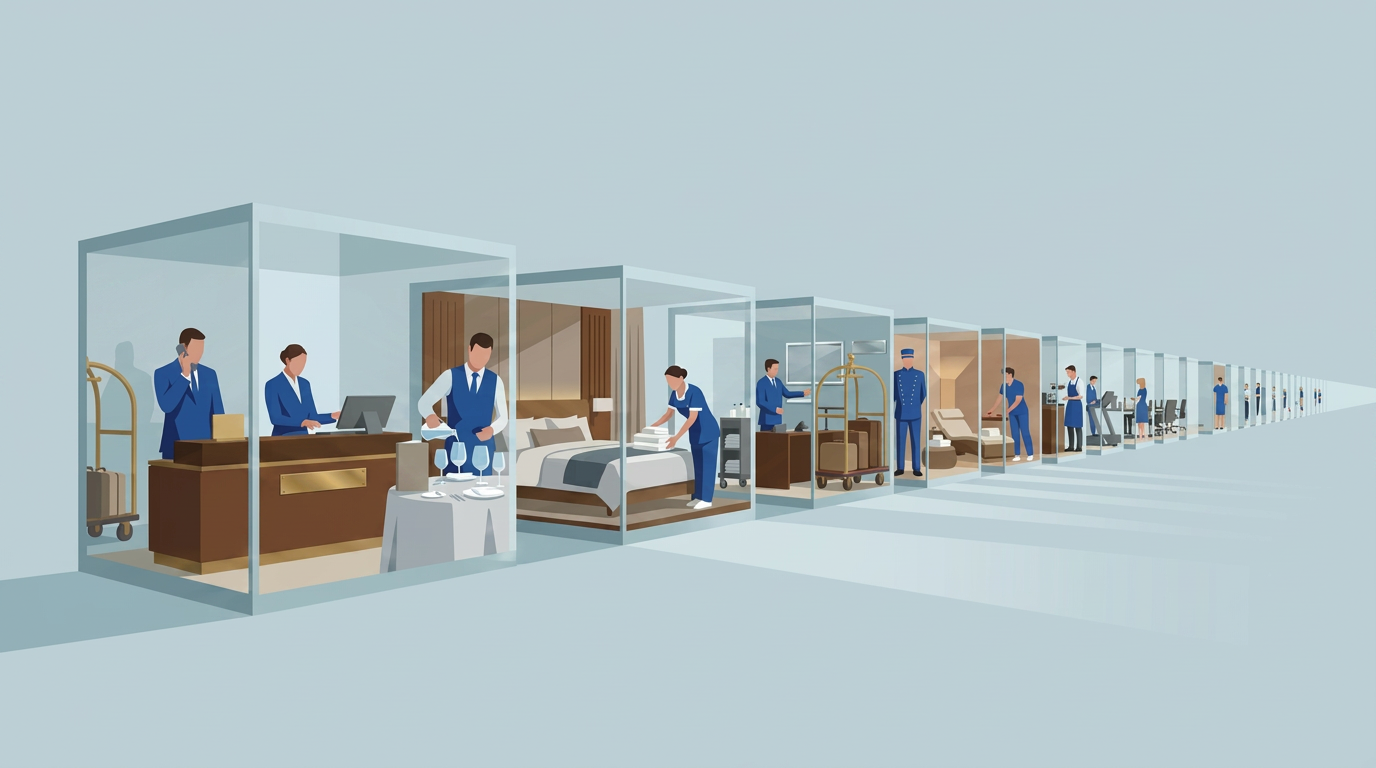
Hotel operations and staffing structures illustrating how rising labor costs are reshaping hotel profitability and operating performance in 2026
In 2026, the hospitality market is no longer moving in a single direction. Instead, a clear divide has emerged between the performance of luxury properties and economy hotels. While both segments face rising costs, their ability to manage these pressures and capture demand varies significantly. This growing performance divide represents a fundamental shift in the industry landscape.

According to City Shift Finance, revenue per available room in the luxury segment has grown by approximately 4%, while the economy segment has seen a more modest increase of around 1%. This disparity is driven by the relative resilience of high-end travelers compared to more price-sensitive consumers. For those in the luxury space, the focus remains on meeting luxury hotel guest expectations despite the hotel performance divide.

Diverging Operational Realities

The operational challenges facing these two segments are also increasingly distinct. Luxury hotels are grappling with the high cost of maintaining service standards in an environment where hotel labor cost.are a significant burden. Their lack of flexibility makes them more vulnerable to margin compression if they cannot sustain high rates.
abstract blue background with subtle flowing forms representing hotel labor cost pressure, workforce misalignment and operational inefficiency across hospitality operations
Practice

Learn more

TThis lack of flexibility is particularly evident in the labor-intensive nature of luxury service. Providing the high-touch experience that guests expect requires a significant investment in staffing, which is increasingly difficult to maintain as hotel margins are shrinking. Operators must find ways to enhance efficiency without sacrificing the qualities that define the luxury experience.

Managing a Fragmented Market

Navigating this divided market requires a tailored approach that reflects the unique pressures of each segment.
  • Market Segmentation: Develop clear strategies that address the specific needs and behaviors of guests in each segment.
  • Operational Flexibility: Enhance the ability to adjust service levels and staffing in response to changing market conditions.
  • Strategic Investment: Focus investment on areas that drive the most value for the target guest, whether that is high-touch service or low-cost efficiency.
  • Data-Driven Decisions: Use granular performance data to identify trends and make more precise operational adjustments.
  • Brand Differentiation: Clearly communicate the value proposition of the property to ensure it remains competitive in its specific segment.

Implications for Investors

The performance divide has significant implications for capital allocation and investment strategy. Investors are increasingly favoring luxury assets for their perceived resilience, while seeking higher yields from economy properties to compensate for their greater volatility. Understanding these dynamics is critical for building a balanced and profitable portfolio in 2026.

The Path Forward

The growing divide between luxury and economy hotel performance is a permanent feature of the 2026 market. By recognizing these diverging trends and adapting their strategies accordingly, operators and investors can navigate this fragmented landscape. For a comprehensive look at the financial pressures facing the industry, see our 2026 hospitality financial outlook.
Hotel Labor Costs: Reshaping 2026 Profitability ➜ Why Hotel Profit Margins Are Shrinking ➜ The Hotel Labor Productivity Gap ➜ Luxury Hotel Guest Expectations ➜ Effective Hotel Cost Control ➜ The Growing Hotel Performance Divide ➜ Optimizing Hotel Workforce Structure ➜ Hotel Operational Discipline ➜ Occupancy vs. Margins ➜ 2026 Hospitality Financial Outlook ➜
Featured Podcasts
Hotel Workforce Optimization Insights illustration showing spheres moving unevenly along a slope, representing misaligned labor deployment

Hotel workforce optimization produces margin and service gains when labor is deployed against actual guest demand rather than historical scheduling assumptions.

FP&A consulting for hospitality concept showing hotel front desk with one active staff member and one idle employee as a guest waits with luggage

Hospitality financial planning misses persist even as targets are revised, because the issue is often the assumptions, not execution.

blue arrows rising upward representing increasing hotel F&B labor costs

F&B labour cost keeps rising because the ratio is addressed as a cost problem when it is often driven by revenue limits.

Connect with our team

Contact us

Contact us

Contact

Sign up to download

Topics of Interest: