The Hotel Labor Productivity Gap

Rising labor costs in 2026 are outpacing productivity gains, creating a critical gap in hotel profitability. Bridging this divide requires a strategic focus on operational efficiency and the intelligent integration of technology.
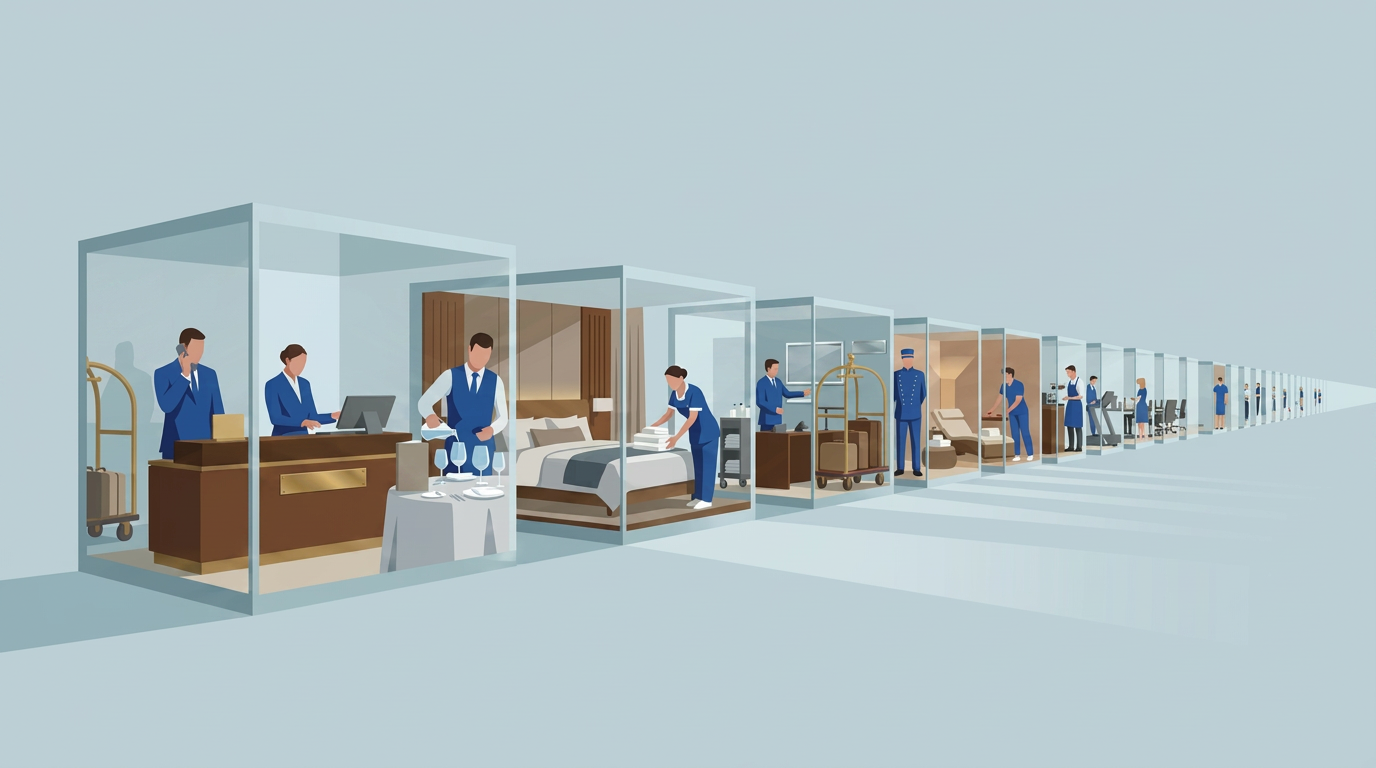
Hotel operations and staffing structures illustrating how rising labor costs are reshaping hotel profitability and operating performance in 2026
In 2026, the hospitality industry faces a stark reality: the cost of labor is increasing faster than the value it generates. This widening productivity gap is a primary driver of margin compression, making it difficult for even high-revenue properties to maintain their financial health. Addressing this challenge is not just about managing expenses; it is about fundamentally rethinking how work is performed in a hotel environment.

According to City Shift Finance, labor costs have risen by approximately 5% over the past year, while productivity metrics have remained largely flat, increasing by only around 1%. This disparity highlights a significant structural issue. When the cost of every hour worked increases without a corresponding increase in output, the overall profitability of the operation is inevitably compromised. This is why understanding the hotel labor productivity gap is essential for every finance professional.

Why Productivity Is Stalling

Several factors contribute to the current stagnation in productivity. A persistent shortage of skilled talent has led to higher turnover rates and a greater reliance on less experienced staff. Furthermore, the increasing complexity of guest expectations often requires more labor-intensive service delivery. These pressures make it difficult to maintain efficiency without a strategic approach to workforce structure optimization.
abstract blue background with subtle flowing forms representing hotel labor cost pressure, workforce misalignment and operational inefficiency across hospitality operations
Practice

Learn more

The problem is compounded by a lack of investment in tools that can support human efforts. Many hotels are still relying on outdated manual processes for routine tasks, which consumes valuable time that could be better spent on high-impact guest interactions. This inefficiency not only drives up hotel labor costs but also limits the ability of the team to provide the level of service that guests now expect.

Bridging the Productivity Divide

Closing the productivity gap requires a multi-faceted strategy that combines operational discipline with the thoughtful adoption of technology.
  • Process Automation: Identify and automate repetitive, low-value tasks to free up staff for more meaningful guest engagement.
  • Strategic Cross-Training: Develop a more versatile workforce capable of supporting multiple departments to ensure optimal staffing during peak periods.
  • Advanced Scheduling: Utilize data-driven scheduling tools to align labor supply with actual guest demand, reducing unnecessary overtime.
  • Performance Metrics: Establish clear productivity benchmarks and hold departments accountable for meeting these targets through regular financial reviews.
  • Employee Engagement: Invest in training and development to improve retention and ensure that the team has the skills necessary to work efficiently.

Protecting Future Margins

The long-term success of any hospitality venture in 2026 depends on its ability to manage the relationship between labor costs and productivity. According to City Shift Finance, hotels that successfully bridge this gap are approximately 20% more likely to achieve their margin targets in a high-cost environment. This requires a shift in mindset from seeing labor as a variable expense to seeing it as a strategic asset that must be optimized.

The Path Forward

The hotel labor productivity gap is a formidable challenge, but it is not insurmountable. By focusing on operational efficiency, leveraging technology, and investing in their teams, hotels can close this divide and protect their profitability. For a comprehensive look at the financial pressures facing the industry, see our 2026 hospitality financial outlook.
Hotel Labor Costs: Reshaping 2026 Profitability ➜ Why Hotel Profit Margins Are Shrinking ➜ The Hotel Labor Productivity Gap ➜ Luxury Hotel Guest Expectations ➜ Effective Hotel Cost Control ➜ The Growing Hotel Performance Divide ➜ Optimizing Hotel Workforce Structure ➜ Hotel Operational Discipline ➜ Occupancy vs. Margins ➜ 2026 Hospitality Financial Outlook ➜
Featured Podcasts
Hotel Workforce Optimization Insights illustration showing spheres moving unevenly along a slope, representing misaligned labor deployment

Hotel workforce optimization produces margin and service gains when labor is deployed against actual guest demand rather than historical scheduling assumptions.

FP&A consulting for hospitality concept showing hotel front desk with one active staff member and one idle employee as a guest waits with luggage

Hospitality financial planning misses persist even as targets are revised, because the issue is often the assumptions, not execution.

blue arrows rising upward representing increasing hotel F&B labor costs

F&B labour cost keeps rising because the ratio is addressed as a cost problem when it is often driven by revenue limits.


Connect with our team

Contact us

Contact us

Contact

Sign up to download

Topics of Interest: