Optimizing Hotel Workforce Structure

Optimizing your hotel workforce structure in 2026 is essential for balancing rising labor costs with high-quality guest service standards. A strategic approach to staffing and role definition can significantly enhance operational efficiency and financial resilience.
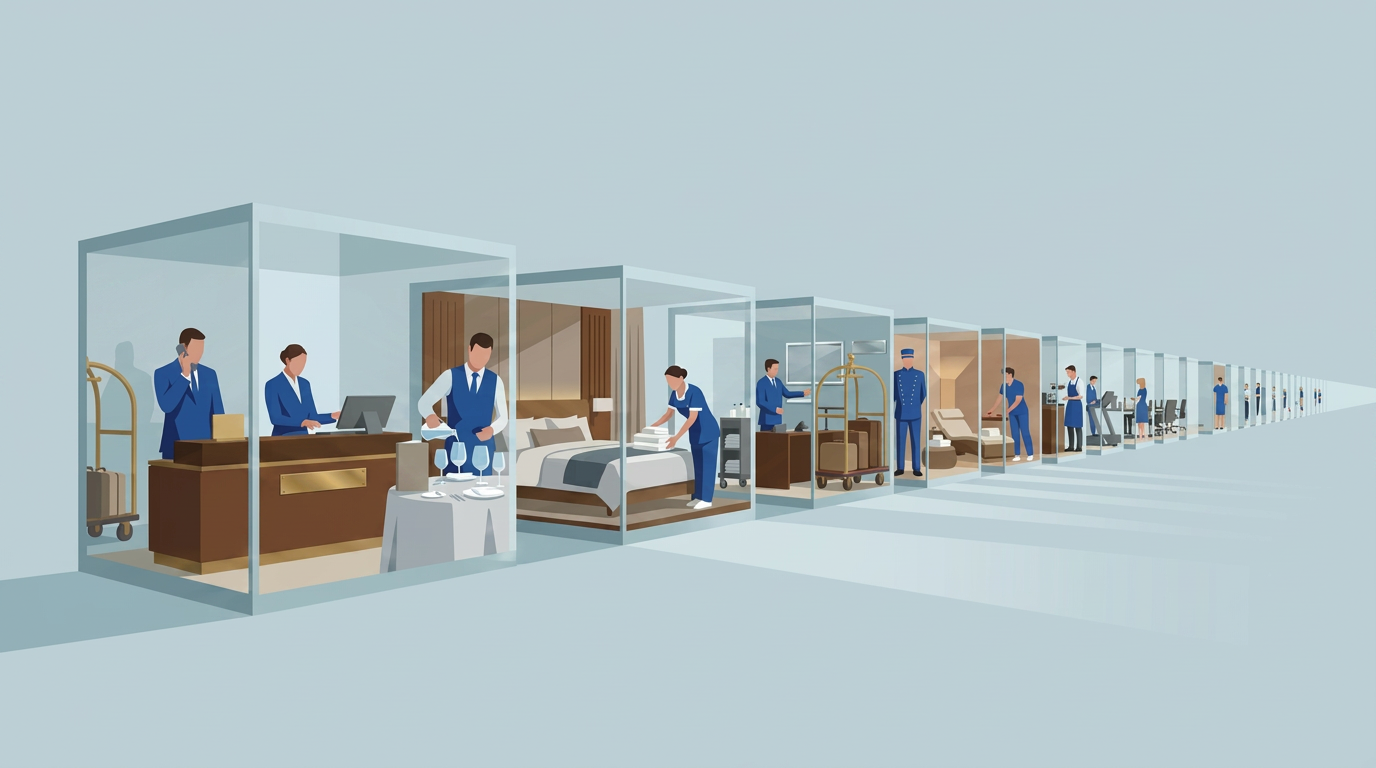
Hotel operations and staffing structures illustrating how rising labor costs are reshaping hotel profitability and operating performance in 2026
In the current hospitality environment, the traditional approach to staffing is no longer sufficient. As hotel labor costs continue to climb, operators must find ways to do more with less without compromising the guest experience. This requires a fundamental rethink of the workforce structure, moving away from rigid departmental silos toward more flexible and integrated models.

According to City Shift Finance, hotels that successfully optimize their workforce structure see a productivity improvement of approximately 10% compared to those using traditional staffing models. This improvement is driven by a more efficient allocation of human resources and a focus on high-value tasks. For properties where hotel margins are shrinking, these structural changes are a critical component of a broader financial recovery strategy.

The Need for Structural Change

The primary driver for structural change is the need for greater operational agility. In an era of volatile demand and high luxury hotel guest expectations, a rigid workforce can be a significant liability. Hotels must be able to adjust their staffing levels and role definitions quickly in response to changing market conditions.
abstract blue background with subtle flowing forms representing hotel labor cost pressure, workforce misalignment and operational inefficiency across hospitality operations
Practice

Learn more

This involves breaking down the barriers between departments and encouraging cross-functional collaboration. For example, many hotels are finding that cross-training staff to handle multiple roles can significantly improve efficiency during peak periods. By creating a more versatile workforce, operators can reduce their reliance on temporary labor and overtime, further helping to bridge the hotel labor productivity gap.

Strategies for Workforce Optimization

Achieving an optimal workforce structure requires a strategic focus on role definition, training, and technology.
  • Role Integration: Combine related tasks into integrated roles to reduce redundancy and improve the flow of service delivery.
  • Cross-Functional Training: Invest in training programs that equip staff with the skills necessary to support multiple departments during peak periods.
  • Flexible Staffing Models: Develop more agile scheduling practices that can respond quickly to fluctuations in guest demand and occupancy.
  • Technology Enablement: Implement tools that support staff in their roles, allowing them to focus on high-value guest interactions rather than routine tasks.
  • Performance Alignment: Ensure that individual and departmental goals are aligned with the overall financial and service objectives of the property.

Enhancing Operational Resilience

A more optimized workforce structure not only improves efficiency but also enhances the overall resilience of the operation. By reducing fixed labor costs and improving productivity, hotels are better positioned to navigate the financial pressures of the 2026 market. This structural flexibility is a key differentiator for successful properties in a highly competitive environment.

The Path Forward

Optimizing the workforce structure is a continuous process that requires ongoing evaluation and adjustment. By focusing on agility, versatility, and efficiency, hotels can build a more resilient and profitable business model for the future. For a comprehensive look at the financial pressures facing the industry, see our 2026 hospitality financial outlook.
Hotel Labor Costs: Reshaping 2026 Profitability ➜ Why Hotel Profit Margins Are Shrinking ➜ The Hotel Labor Productivity Gap ➜ Luxury Hotel Guest Expectations ➜ Effective Hotel Cost Control ➜ The Growing Hotel Performance Divide ➜ Optimizing Hotel Workforce Structure ➜ Hotel Operational Discipline ➜ Occupancy vs. Margins ➜ 2026 Hospitality Financial Outlook ➜
Featured Podcasts
Hotel Workforce Optimization Insights illustration showing spheres moving unevenly along a slope, representing misaligned labor deployment

Hotel workforce optimization produces margin and service gains when labor is deployed against actual guest demand rather than historical scheduling assumptions.

FP&A consulting for hospitality concept showing hotel front desk with one active staff member and one idle employee as a guest waits with luggage

Hospitality financial planning misses persist even as targets are revised, because the issue is often the assumptions, not execution.

blue arrows rising upward representing increasing hotel F&B labor costs

F&B labour cost keeps rising because the ratio is addressed as a cost problem when it is often driven by revenue limits.

Connect with our team

Contact us

Contact us

Contact

Sign up to download

Topics of Interest: