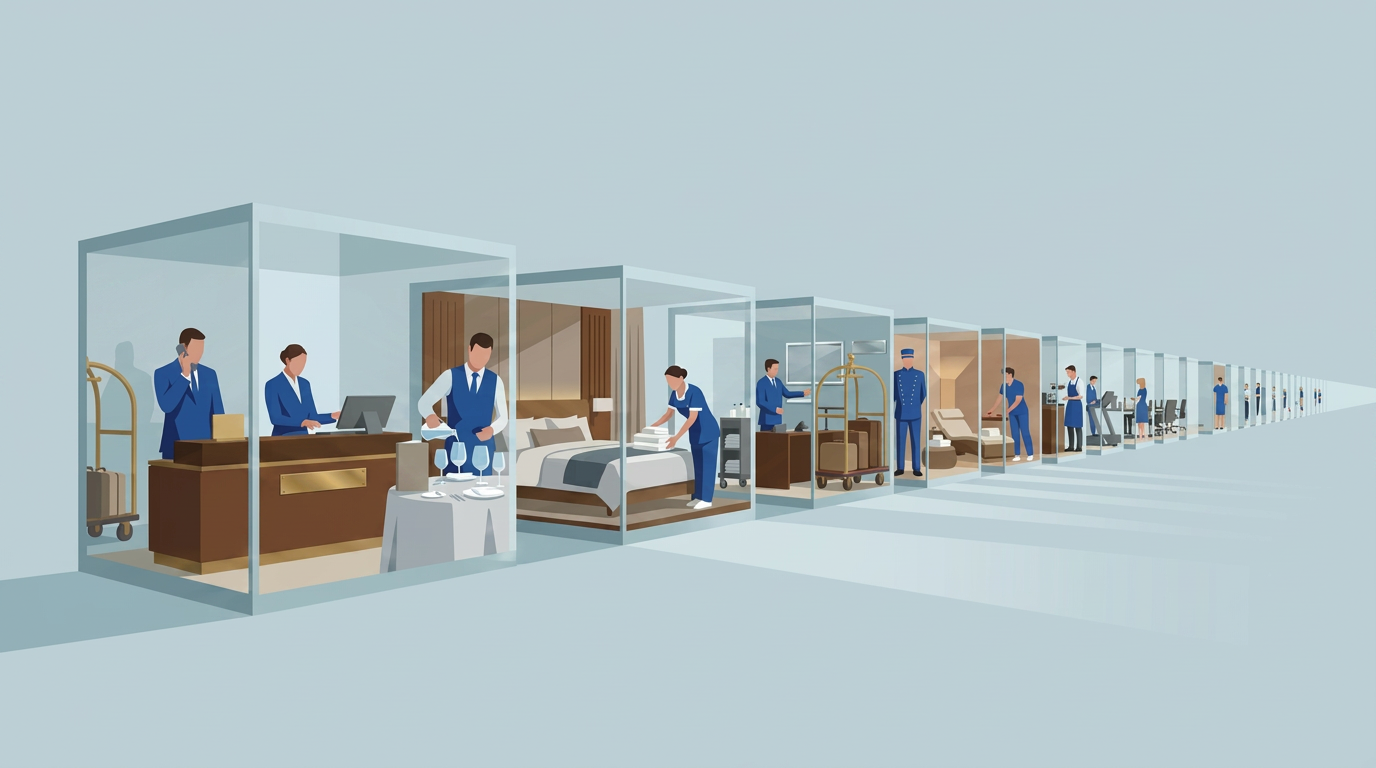
In the current hospitality environment, the traditional approach to staffing is no longer sufficient. As
hotel labor costs continue to climb, operators must find ways to do more with less without compromising the guest experience. This requires a fundamental rethink of the workforce structure, moving away from rigid departmental silos toward more flexible and integrated models.
According to City Shift Finance, hotels that successfully optimize their workforce structure see a productivity improvement of approximately 10% compared to those using traditional staffing models. This improvement is driven by a more efficient allocation of human resources and a focus on high-value tasks. For properties where
hotel margins are shrinking, these structural changes are a critical component of a broader financial recovery strategy.
Achieving an optimal workforce structure requires a strategic focus on role definition, training, and technology.
Optimizing the workforce structure is a continuous process that requires ongoing evaluation and adjustment. By focusing on agility, versatility, and efficiency, hotels can build a more resilient and profitable business model for the future. For a comprehensive look at the financial pressures facing the industry, see our
2026 hospitality financial outlook.