
08 – When Hotel Outsourced Cafe Operations Cost More Than the Contract Rate Reflects
The hotel signed a licensing agreement with a branded coffee operator to run the lobby coffee shop. The arrangement eliminated the hotel’s direct lab...
Get started
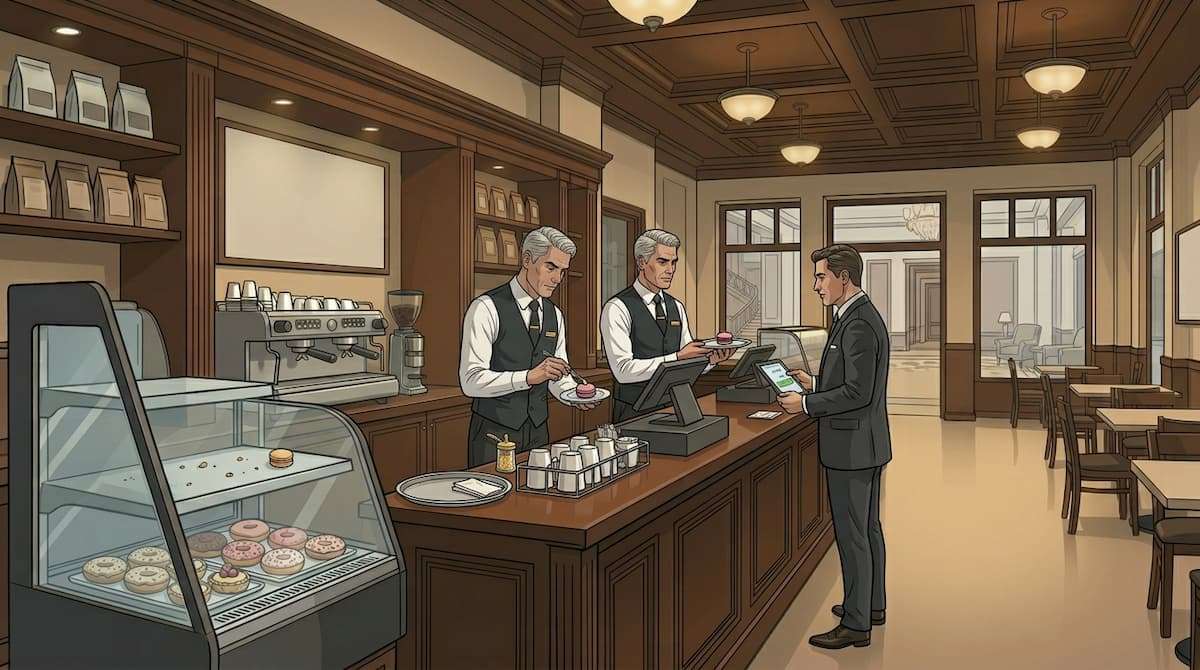
The hotel’s F&B department generated $4.2 million in annual revenue across its restaurant, bar, and coffee shop. Total F&B labor cost was $1.47 million, a 35% ratio that the F&B director reported as within range for a full-service hotel operation. What the combined ratio obscured was that the coffee shop, generating $672,000 of the $4.2 million in F&B revenue, was running a labor-to-revenue ratio of 42%. The restaurant was running 31%. The bar was running 29%. The coffee shop’s elevated ratio was being averaged into the department total in a way that made the department’s financial performance look adequate while the coffee shop’s labor structure was consuming margin that the restaurant and bar were generating.
Hotel coffee shop labor cost affects F&B hub financial performance in ways that are invisible when the hub is reported as a single combined figure. The coffee shop’s structural labor intensity subsidizes the appearance of department efficiency while consuming the margin that better-performing outlets produce.
Hotel F&B departments that report a single combined labor-to-revenue ratio are averaging the financial performance of materially different outlet formats into a number that obscures how each outlet is performing individually. A department where the restaurant and bar are each running strong labor ratios and the coffee shop is running an elevated one will show a combined ratio that looks acceptable because the coffee shop’s relatively small revenue contribution limits how much it can distort the total.
The financial consequence of that concealment is a decision-making environment in which the coffee shop’s structural labor inefficiency is never formally addressed because it never appears as a problem in the metric the department is managed against. The restaurant and bar are performing well. The combined ratio is within range. The coffee shop is quietly consuming margin that neither outlet is aware of contributing to cover.
“The F&B total was fine. It was only when we broke it down by outlet that we understood the coffee shop was running at a ratio 11 points above the department total. The restaurant and bar were carrying it.”

We help hotels control labor costs by connecting staffing, productivity, forecasting, budgets, and department-level workforce decisions to changing property demand while protecting service quality.
Learn MoreHotel coffee shop labor-to-revenue targets should reflect the format’s economics rather than the restaurant benchmark. A coffee shop with high transaction volume, a strong morning capture rate, and a lean staffing model can operate at labor ratios of 28% to 34%. A coffee shop with lower capture rates, extended operating hours, and grab-and-go programming may run at 38% to 45%. Neither of those is the same as a restaurant target. Managing the coffee shop against a restaurant benchmark either sets an unachievable target that generates constant variance explanation or creates the impression that the outlet is acceptable when it is absorbing margin the hub cannot afford.
Establishing a coffee shop-specific labor-to-revenue target, tracking it monthly as a distinct metric from the F&B hub total, and connecting any movement above target to the specific operating conditions producing it, transforms the coffee shop from a number that disappears into the department average into a financial line that is actively managed. Hotels that have made that shift find that the F&B hub’s true financial performance becomes visible at the outlet level, that the coffee shop’s contribution to hub margin is measured rather than assumed, and that the decisions about staffing, operating hours, and program scope are made with the financial information required to justify them. This is the outlet-level financial management that hotel F&B hub labor cost by outlet format produces when each outlet is evaluated against the economics of its own format rather than against the combined department standard.
“When we set an outlet-specific target for the coffee shop, the financial conversation about it became specific. Before that it had been invisible in the department total. After that it had its own number to manage against.”
A hotel F&B hub reporting a single combined labor-to-revenue ratio is producing a metric that tells leadership whether the department is broadly within range while concealing which outlets are performing strongly and which are absorbing the margin that strong performance generates. Hotels that decompose the combined ratio into outlet-level components find that the hub’s financial performance is more differentiated than the total suggests and that the decisions required to improve it are more specific than the combined metric can direct.
This Article Is Part of a Larger Series
Access the complete Hotel Labor Series
The hotel signed a licensing agreement with a branded coffee operator to run the lobby coffee shop. The arrangement eliminated the hotel’s direct lab...
Get started
The hotel coffee shop operated from 6:00 AM to 6:00 PM and generated $1,840 in daily revenue on an average trading day. It was staffed with 2 baristas and ...
Get started