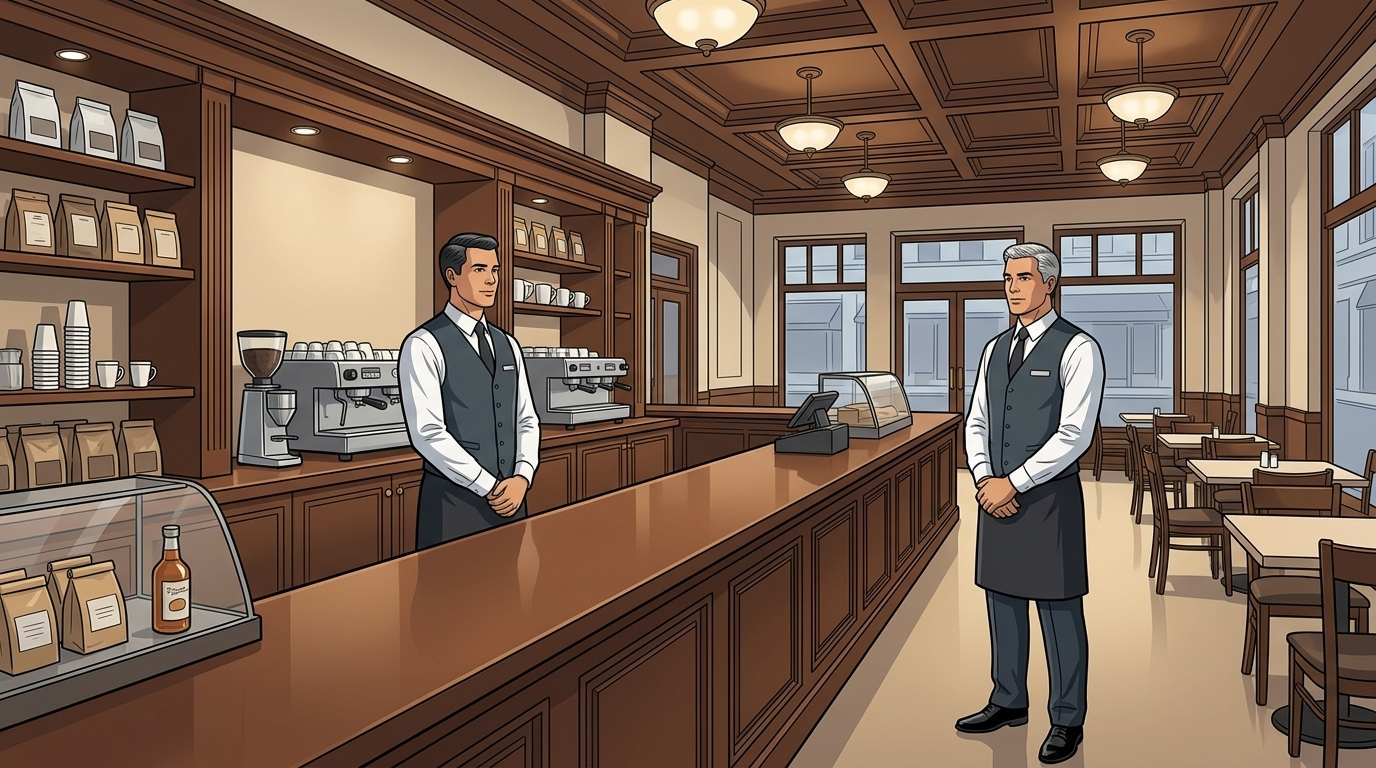
01 – When Hotel Cafe Labor Cost Exceeds What Daypart Revenue Can Justify
The hotel coffee shop operated from 6:00 AM to 6:00 PM and generated $1,840 in daily revenue on an average trading day. It was staffed with 2 baristas and ...
Get started
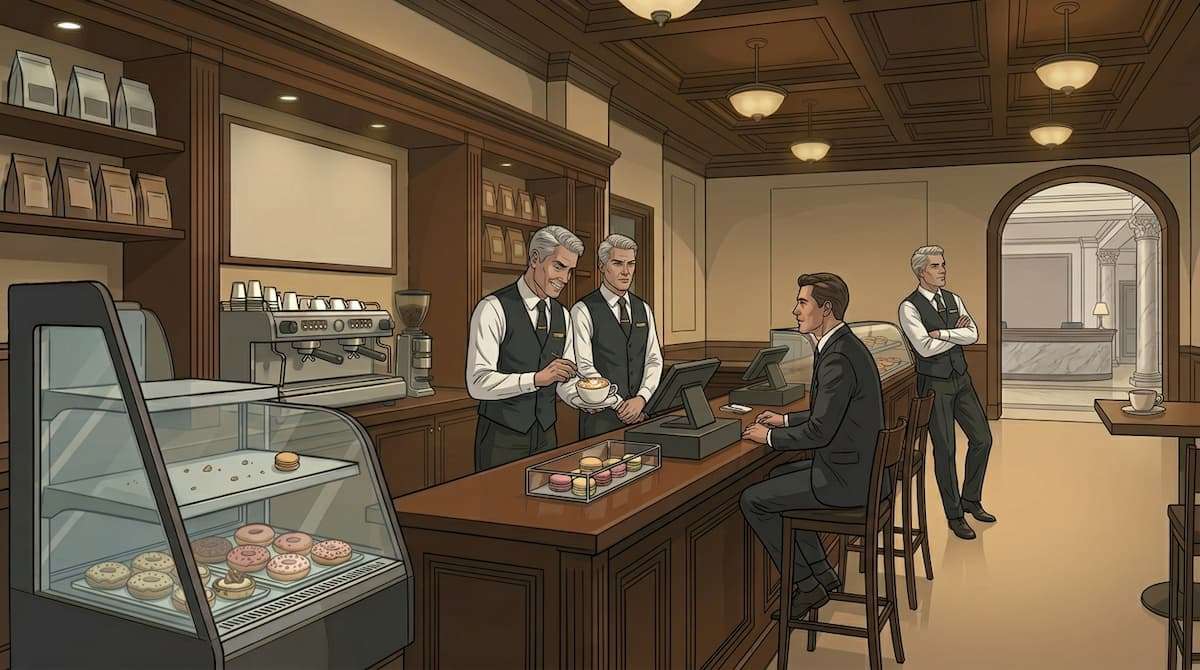
The hotel signed a licensing agreement with a branded coffee operator to run the lobby coffee shop. The arrangement eliminated the hotel’s direct labor cost for the outlet. The branded operator staffed the counter, managed the equipment, and provided the product. In exchange the hotel received a revenue share percentage and gave up a portion of the lobby space and the F&B revenue that would otherwise flow to the hotel’s department. 18 months into the arrangement, the F&B director was asked to assess whether the outsourced model was performing better or worse than the in-house model it had replaced. The assessment required calculating what the hotel had given up in F&B revenue and margin against what it had saved in labor cost. The calculation had not been performed before the decision was made.
Hotel coffee shop outsourcing decisions are frequently made on the basis of labor cost elimination without calculating the revenue and margin the hotel gives up through the outsourced arrangement.
A hotel operating a coffee shop in-house generates the full transaction revenue in its F&B department. The labor cost of that operation is real but the revenue belongs entirely to the hotel. A hotel that outsources the coffee shop to a branded operator receives a revenue share that represents a fraction of the transaction revenue the counter generates. The branded operator retains the majority of the revenue in exchange for providing the labor, the product, and the brand.
A hotel coffee shop generating $672,000 in annual in-house revenue at a 42% labor ratio is generating $389,760 in gross margin before cost of goods. If the hotel outsources that operation to a branded operator who returns a 15% revenue share, the hotel receives $100,800 in annual revenue share against $0 in direct labor cost. The labor saving is real: $282,240 in annual bar labor is eliminated. The revenue reduction is also real: $571,200 in annual F&B revenue disappears from the department. The net financial impact of the outsourcing is a reduction in gross contribution from $389,760 to $100,800. That is not obviously a better financial outcome than the in-house model it replaced.
“We outsourced the coffee shop to eliminate the labor cost. When we ran the full comparison 18 months later, we had saved less in labor than we had lost in net contribution from the outlet. The decision had looked different before we did the math.”

We help hotels control labor costs by connecting staffing, productivity, forecasting, budgets, and department-level workforce decisions to changing property demand while protecting service quality.
Learn MoreHotel coffee shop outsourcing to a branded operator is frequently justified on the basis that the branded operator’s recognition, quality standards, and guest loyalty generate incremental hotel revenue through higher capture rates and stronger guest satisfaction. Those benefits are real in the right context. A recognizable coffee brand in a hotel lobby may capture hotel guests who would not use an unbranded coffee counter. The incremental capture rate the brand generates, measured in additional transactions per day against the prior in-house performance, is the financial offset to the revenue share reduction.
Calculating whether the brand premium justifies the revenue share reduction requires tracking the coffee shop’s capture rate before and after the outsourcing, calculating the incremental revenue the brand generates, and placing that incremental revenue against the reduction in contribution that the revenue share arrangement produces. Hotels that have built that calculation find that branded coffee operators generate meaningful incremental traffic in some markets and negligible incremental traffic in others. The financial case for the outsourced arrangement depends entirely on which condition the hotel is in. Without the calculation, the decision is made on brand assumption rather than on financial outcome. This is the outsourcing return comparison that hotel coffee shop in-house versus outsourced financial review requires before a decision to exit a directly operated outlet is treated as financially resolved.
“The branded operator did increase our capture rate. By about 4 percentage points. That generated roughly $28,000 in incremental annual revenue. We had given up $289,000 in annual contribution to get it. The math did not support the decision.”
A hotel coffee shop outsourcing decision evaluated solely on labor cost elimination is evaluated on one side of a financial equation that has 3 variables: the labor saving, the revenue share received, and the contribution margin given up. Hotels that calculate all 3 before the decision make the outsourcing choice on complete financial information. Hotels that calculate only the labor saving discover the revenue and margin implications 18 months after the contract is signed.
This Article Is Part of a Larger Series
Access the complete Hotel Labor Series
The hotel coffee shop operated from 6:00 AM to 6:00 PM and generated $1,840 in daily revenue on an average trading day. It was staffed with 2 baristas and ...
Get started
The hotel coffee shop ran 2 baristas from 6:00 AM to 2:00 PM and 1 barista from 2:00 to 6:00 PM. The morning shift had been set when the outlet opened. The...
Get started