07 – How Hotel Banquet Labor as a % of Event Revenue Signals Pricing Problems
The hotel banquet department generated $2.1 million in event revenue across the prior year. Total banquet labor cost, including servers, captains, setup st...
Get started
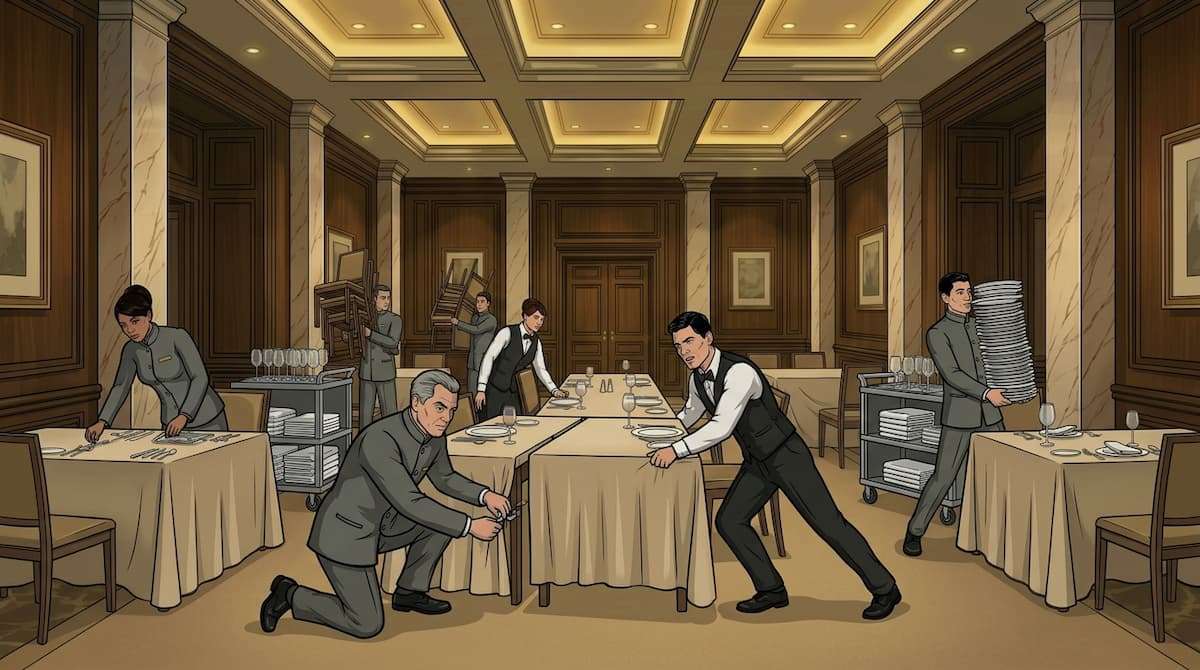
The corporate client called at 11:00 AM for a 6:00 PM banquet. The guest count had increased from 180 to 240. The room configuration needed to change from classroom to banquet rounds. The catering order required adjustment. The banquet team reconfigured 12 tables, reset linen and place settings for 60 additional covers, coordinated the revised catering order with the kitchen, and adjusted the server assignments. The reconfiguration required 4 banquet staff for 2.5 hours. At a blended rate of $26 per hour, the reconfiguration labor cost was $260. That cost was not in the event contract. It was not in the event P&L. It appeared in the banquet department’s daily labor total as part of a shift that also covered the event’s regular setup. The $260 was invisible as a change-driven cost.
Hotel banquet last-minute event changes generate real, attributable labor cost that event contracts do not anticipate and event P&Ls do not capture. The cost accumulates across a season of events in ways that standard reporting cannot surface.
Hotel banquet event changes occur on a spectrum from minor adjustments to complete operational reworks. A guest count increase of 10 requires additional place settings and a server assignment adjustment. A guest count increase of 60 with a room reconfiguration requires significant labor across multiple positions over multiple hours. Both are processed through the same operational channel, the call to the banquet manager, and both result in the same financial treatment: the additional labor is absorbed into the event’s setup period and appears in the daily labor total without attribution to the change that generated it.
The financial consequence of that treatment accumulates across a full banquet season. A hotel hosting 200 events per year with an average of 1.4 significant last-minute changes per event at an average additional labor cost of $180 per change is absorbing $50,400 in unattributed change-driven labor annually. That cost does not appear in any event P&L, is not recovered through any contract provision, and does not inform any pricing decision the hotel makes about future events.
“We handled last-minute changes as part of operations. The labor cost of handling them was just absorbed. When we added it up across the banquet season, the number was large enough to change how we thought about change policy and event pricing.”

We help hotels control labor costs by connecting staffing, productivity, forecasting, budgets, and department-level workforce decisions to changing property demand while protecting service quality.
Learn MoreHotel banquet contracts frequently include change fee provisions for amendments made within a specified window before the event, typically 48 to 72 hours. Those provisions exist precisely because last-minute changes generate real operational cost. The problem is that the change fee is often set as a flat administrative charge that does not reflect the actual labor cost the change generates. A $150 flat change fee against a room reconfiguration that costs $260 in labor does not recover the full cost. A change fee formula that reflects actual labor hours required would produce recovery that matches cost.
Building a change labor cost model for hotel banquet operations requires tracking the labor generated by each category of change, identifying the average cost by change type, and using those averages to set change fee provisions that recover the actual cost of accommodation. Hotels that have built that model find that their change fee structures are systematically below the labor cost they are supposed to recover and that adjusting the structure reduces the unattributed change-driven labor the banquet department absorbs. This is the change cost recovery mechanism that hotel banquet event contract labor cost and change policy requires to prevent last-minute change costs from being absorbed as departmental overhead rather than recovered from the client decisions that generate them.
“We repriced our change fees based on actual labor cost by change category. The client relationships did not suffer. The unattributed change labor in the banquet budget dropped materially within 2 quarters.”
A hotel banquet contract structure that does not recover the labor cost of last-minute changes is subsidizing client scheduling flexibility with operational labor cost. The subsidy is real, it is recurring, and it grows with the hotel’s event volume. Hotels that build change cost tracking, calculate the annual subsidy they are providing, and adjust their contract change provisions accordingly find that the recovery does not damage client relationships and the financial improvement is immediate and measurable.
This Article Is Part of a Larger Series
Access the complete Hotel Labor Series
The hotel banquet department generated $2.1 million in event revenue across the prior year. Total banquet labor cost, including servers, captains, setup st...
Get started
The hotel’s kitchen operated as a unified cost center serving the restaurant, the bar, room service, and all banquet events from a single kitchen bud...
Get started