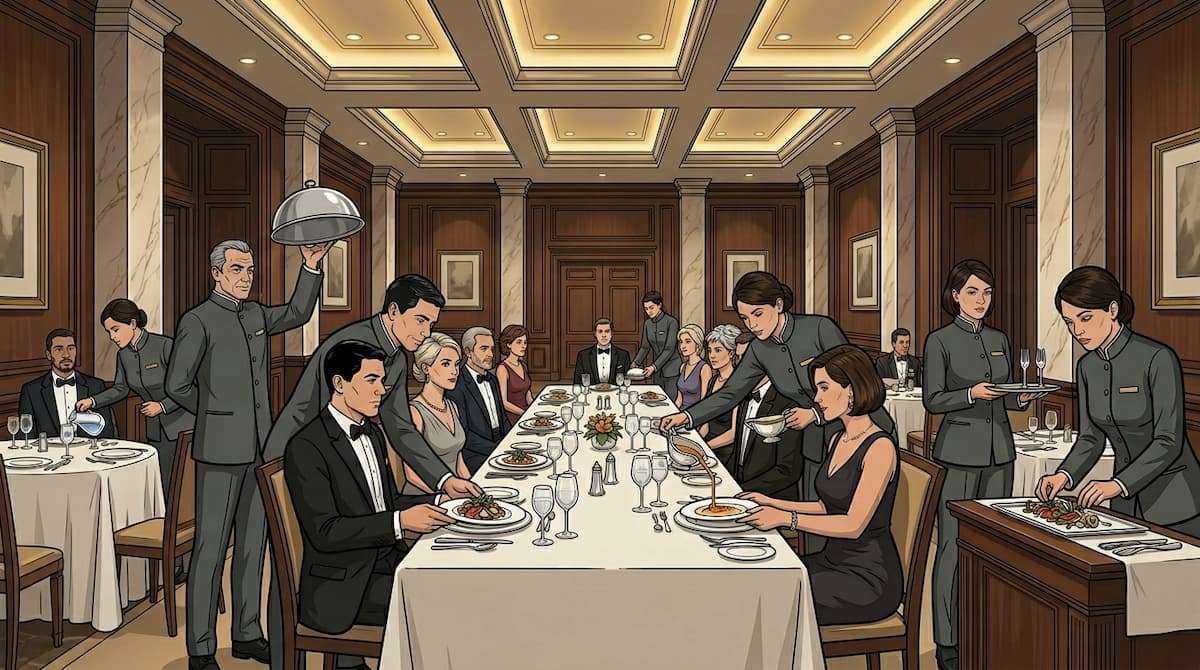
The hotel’s kitchen operated as a unified cost center serving the restaurant, the bar, room service, and all banquet events from a single kitchen budget. The executive chef managed staffing for all production. When a 350-person banquet required 6 additional kitchen positions for the evening, those positions were called in and logged against the general kitchen budget. The banquet event P&L showed food cost as a percentage of banquet food revenue. It did not show the kitchen labor cost of producing that food. The kitchen labor cost of the 350-person banquet was absorbed into the general kitchen budget alongside the labor of the restaurant and room service for the same evening, with no mechanism to separate what belonged to the banquet from what belonged to the other outlets.
Hotel banquet kitchen labor cost is the most consistently unattributed cost in the banquet financial picture. It belongs to specific events. It is coded to a general kitchen budget that serves all outlets simultaneously.
The Kitchen Surge That Banquets Create
Hotel banquet production creates a kitchen labor demand pattern that restaurant production does not. A restaurant service builds gradually from opening through the service peak and winds down. A banquet production requires a synchronized surge, all 350 plates produced and plated within a defined service window. That synchronization requires more kitchen staff per unit of time than restaurant production requires, even when the cover count is similar. 6 additional kitchen positions called in for a 350-person banquet generate a kitchen labor cost that the restaurant kitchen for the same evening does not require.
The 6 additional positions are a direct banquet cost. They would not be present if the banquet did not exist. They cannot be justified by the restaurant production they are not performing. Their labor cost belongs in the banquet event P&L. The accounting treatment that codes them to the general kitchen budget makes them invisible as a banquet cost and makes the banquet’s apparent profitability higher than it actually is.
“We called in extra kitchen staff for large banquets every time. Those staff were in the general kitchen budget. The banquet P&L never saw them. The banquet always looked more profitable than it was because the kitchen labor that made it possible was somewhere else.”
Building the Kitchen Attribution Model
Hotel banquet kitchen labor attribution requires identifying which kitchen positions are called in or dedicated to banquet production for a specific event and separating their hours from the kitchen positions that would be present regardless of the banquet. The baseline kitchen team, the positions required to run the restaurant and room service on any given evening, is the kitchen cost the hotel carries regardless. The incremental positions added for the banquet are the kitchen cost the banquet caused.
In practice, the attribution is more nuanced than that binary because senior kitchen staff, including the executive chef and sous chef, typically manage banquet production as part of their regular duties without specific banquet-attributed hours. A practical attribution model allocates incremental positions directly to the banquet, allocates a defined percentage of senior staff time to the banquet based on the evening’s production complexity, and leaves the baseline kitchen team in the general kitchen budget where it belongs.
Implementing hotel banquet kitchen labor attribution requires a protocol agreed between the executive chef and the banquet director that defines which positions are banquet-attributed, how senior staff time is allocated during simultaneous operations, and how the attribution is recorded in the time and attendance system. Hotels that have built that protocol find that their banquet event P&Ls are significantly more accurate and that the event pricing decisions they make from those P&Ls produce revenue that covers the complete cost of the events they are hosting. This is the kitchen cost inclusion that hotel banquet event P&L and kitchen labor attribution requires to produce a financial picture of each event that reflects everything the event actually cost to produce and serve.
“When we built the kitchen attribution model and applied it retrospectively to the prior year’s banquet events, the effective profitability of our largest events dropped by 9 to 14 percentage points. The kitchen labor had always been there. It just hadn’t been in the right report.”
What Kitchen Labor Attribution Is Telling the Banquet P&L
A hotel banquet event P&L that shows food cost as a percentage of food revenue but does not show the kitchen labor cost of producing that food is missing the most labor-intensive cost component in the event’s production. The food percentage looks acceptable. The full cost of the food, including the kitchen labor to execute it, produces a different and more accurate financial picture. Hotels that include kitchen labor attribution in their banquet event P&Ls make fundamentally different decisions about food menu complexity, event pricing, and the minimum food and beverage commitments that justify the production investment a specific event requires.
This Article Is Part of a Larger Series
Access the complete Hotel Labor Series