03 – How Hotel Casual Banquet Labor Dependency Raises Cost Per Cover
The hotel’s banquet department employed 8 full-time banquet servers and drew from a casual labor pool of 22 registered individuals for events requiri...
Get started
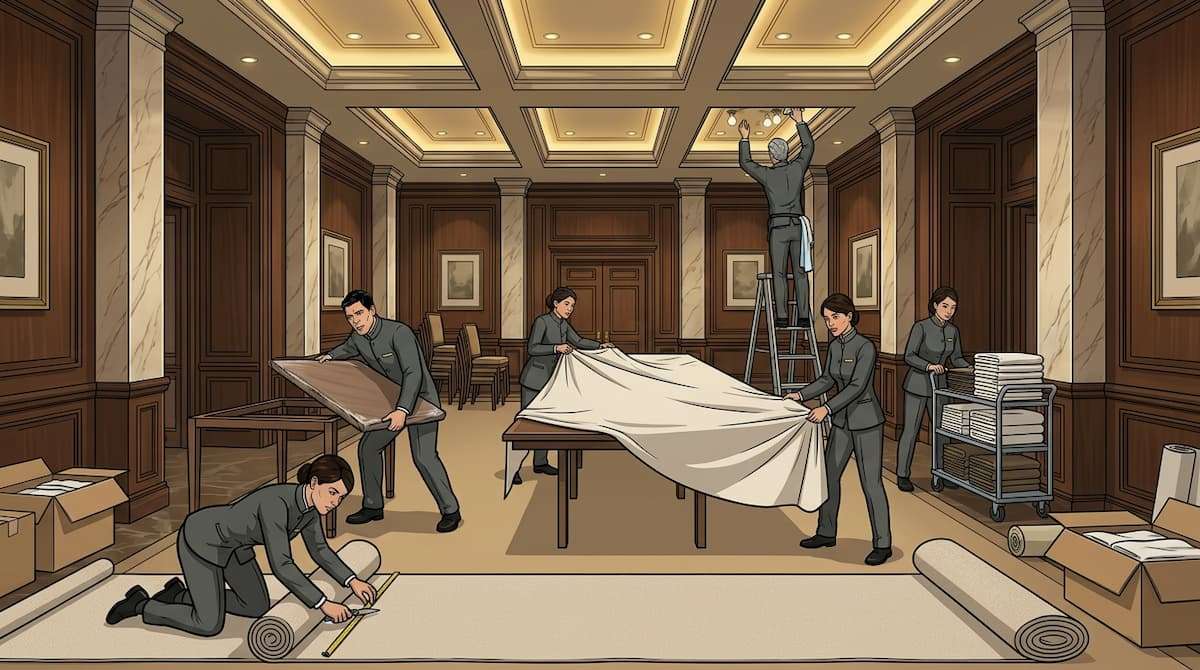
A 300-person gala required 4 hours of setup labor before the first guest arrived and 2.5 hours of strike labor after the last guest departed. The setup team comprised 6 banquet staff. The strike team comprised 4. The combined setup and strike labor cost was $1,260. That cost appeared in the banquet department’s weekly labor total. It did not appear in the gala’s event P&L. The event P&L showed the food and beverage revenue, the service charge, the room rental, and the direct service labor during the event itself. The 4-hour setup and 2.5-hour strike bookending the event were treated as departmental overhead rather than as event cost. The gala looked profitable. Its true labor cost was $1,260 higher than the event report showed.
Hotel banquet setup and strike labor is structurally classified as departmental overhead rather than as event cost in most hotel accounting systems. The financial consequence is an event P&L that reflects service labor but not the labor that made the service possible.
Every hotel banquet event requires setup. Tables, linens, centerpieces, service stations, AV equipment placement, chair arrangement, and lighting configuration are all executed before the event begins and generate real labor hours. Those hours are performed by identifiable staff, logged in time and attendance systems, and paid through the payroll. The only thing missing is the attribution connecting those hours to the specific event that required them.
The setup labor for a 300-person gala is not general departmental overhead in any meaningful operational sense. It exists because the gala exists. It would not be performed on that day if the gala had been cancelled. The relationship between the setup labor and the event is direct and attributable. The accounting treatment that classifies it as overhead is a convention, not a financial requirement, and it produces an event P&L that systematically understates the true labor cost of every event the hotel hosts.
“We knew setup took 4 hours for a large event. We just never put that into the event cost. It was always just hours that happened before the event in our labor report, not hours that the event caused.”

We help hotels control labor costs by connecting staffing, productivity, forecasting, budgets, and department-level workforce decisions to changing property demand while protecting service quality.
Learn MoreHotel banquet strike labor carries an additional financial dimension that setup does not. When a banquet room is struck and turned for the next event, the strike labor is serving 2 masters simultaneously. It is closing the current event and enabling the next one. A strike team that breaks down a gala and resets the room for a breakfast meeting the following morning is generating labor cost that could reasonably be attributed to both events. Current accounting practice attributes it to neither, treating it as operational continuity cost that sits in the department total without connection to either the event that created the need for it or the event that benefited from it.
Building hotel banquet event P&Ls that include setup and strike labor requires establishing a labor attribution protocol that connects pre-event and post-event hours to the specific event that generated them. The protocol needs to handle turnover hours between consecutive events, allocating the strike-and-reset labor to the events on each side proportionally rather than absorbing it into operational overhead. Hotels that have implemented that protocol find that their event P&Ls are materially more accurate and that their event pricing decisions improve as a result. This is the full-labor-cycle event attribution that hotel banquet event profitability and setup strike cost produces when the hours surrounding an event are treated as event cost rather than as departmental overhead.
“When we added setup and strike to the event P&L, the margin on our most labor-intensive events dropped by 8 to 12 percentage points. That changed which events we actively pursued and how we priced the ones we did.”
A hotel banquet event P&L that shows strong margin but does not include setup and strike labor is showing a partial financial picture. The margin is real within the scope of what the P&L includes. It does not reflect the full labor investment the event required. Hotels that include the full labor cycle in their event P&Ls make different decisions about minimum event fees, room rental pricing, and which event formats generate genuine margin versus which ones look profitable while absorbing departmental overhead they never paid for.
This Article Is Part of a Larger Series
Access the complete Hotel Labor Series
The hotel’s banquet department employed 8 full-time banquet servers and drew from a casual labor pool of 22 registered individuals for events requiri...
Get started
The hotel’s banquet department operated with a director of banquets, 2 banquet captains, and a banquet coordinator. The supervisory structure cost $2...
Get started