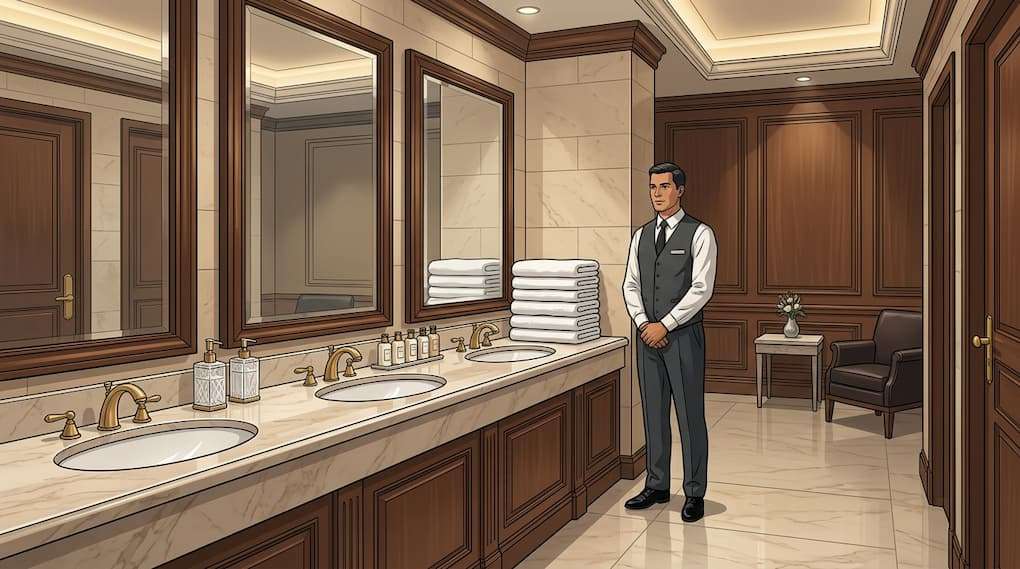
05 – Why Hotel Restroom Attendant Cost Is Rarely Connected to Guest Volume
The hotel deployed restroom attendants in the lobby-level public restrooms from 8:00 AM to 11:00 PM daily. 2 attendants covered the full operating window, ...
Get started
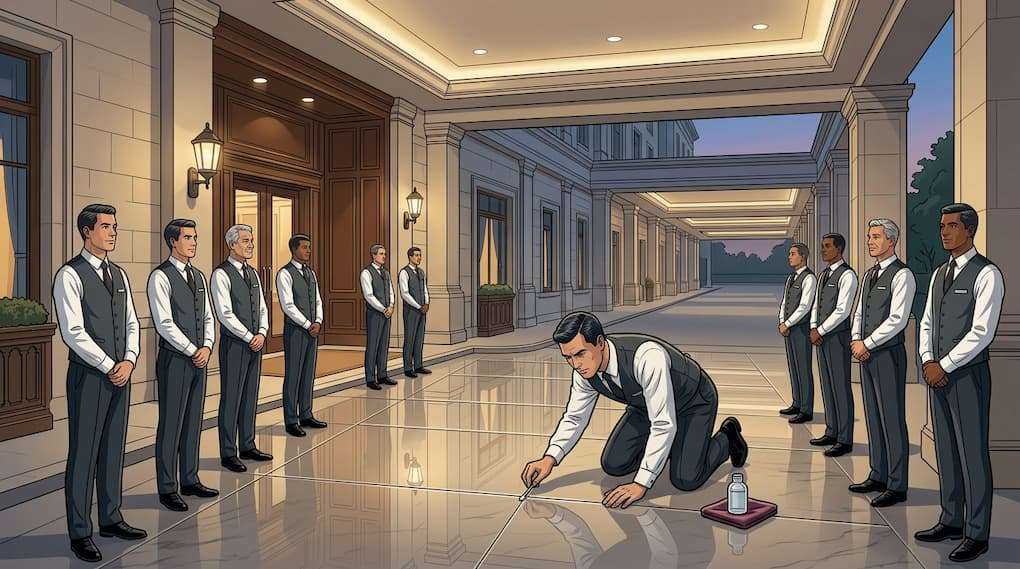
The hotel’s public area cleaning schedule included daily maintenance cleaning of lobbies, corridors, and restrooms. The schedule did not include a separate line for deep clean cycles. Deep cleaning of lobby floors, carpet shampooing in corridors, and restroom refurbishment happened periodically when the operations manager determined conditions required it. The hours were absorbed into the daily cleaning schedule as extended shifts or additional call-ins. The monthly public area labor budget showed consistent overruns that the operations manager explained as reflecting intensive cleaning periods. Finance accepted the explanation. Nobody tracked how many deep clean events had occurred, what they cost in hours, or whether the cost was recoverable through scheduling adjustments.
Hotel public area deep clean cycles generate a labor commitment that the standard daily cleaning budget was not built to absorb. When the 2 are not separated, the result is a persistent budget variance that looks like operational inconsistency when it is actually a budget design failure.
Hotel public area daily cleaning maintains a standard that guests encounter throughout their stay. Deep cleaning restores a standard that has degraded below the daily maintenance level or prepares a space for an elevated use. A lobby that receives daily sweeping, mopping, and surface cleaning requires 3 hours of daily labor. The same lobby receiving a quarterly deep clean, including floor stripping and refinishing, upholstery cleaning, and detailed surface restoration, requires 14 hours of labor. The 2 are not the same product. They do not belong in the same budget line.
When they are combined, the monthly labor average smooths out the deep clean spikes in a way that obscures both the cost of the deep clean and the efficiency of the daily cleaning. A month with 2 scheduled deep cleans will show elevated public area labor cost. Finance will ask whether the daily cleaning is efficient. The answer is yes. The question being asked is wrong because the report does not distinguish between the 2 labor products it is aggregating.
“Every quarter we got a variance question about public area labor that we couldn’t answer clearly. The answer was deep cleaning. But because it wasn’t a separate line, the conversation went in circles every time.”

We help hotels control labor costs by connecting staffing, productivity, forecasting, budgets, and department-level workforce decisions to changing property demand while protecting service quality.
Learn MoreHotel public area deep clean events occur in 2 patterns. Scheduled deep cleans happen at defined intervals, quarterly carpet shampooing, annual lobby floor restoration, and seasonal restroom refurbishment. Trigger-based deep cleans happen in response to specific events, a large group departure leaving heavy corridor soiling, a spill that requires professional remediation, or a public health protocol following an incident. Both generate real labor cost. Scheduled deep cleans can be budgeted. Trigger-based deep cleans cannot. A budget that does not separate the 2 carries both as unexplained variance when the trigger-based events occur.
Separating public area labor into daily cleaning, scheduled deep clean, and trigger-based deep clean budget lines produces a financial picture of the function that the aggregate daily labor line cannot provide. The daily cleaning line becomes a stable efficiency measure. The scheduled deep clean line becomes a predictable capital-like commitment that can be built into the annual budget accurately. The trigger-based line becomes a variance reserve that acknowledges the category exists and sets a reasonable expectation for what it will cost. This budget structure requires no additional labor. It requires a different way of categorizing and reporting the labor that already exists, which is the foundational work that hotel public area cost center design applies before the department’s financial performance can be meaningfully managed.
“We split the public area labor budget into 3 lines for the first time last year. The variance questions stopped. Not because costs changed but because the categories finally matched what was actually happening.”
A public area budget that consistently shows labor overruns without a clear operational explanation is almost certainly absorbing unscheduled deep clean events in a daily cleaning budget line that was never designed to accommodate them. The fix is not reducing the cleaning standard or pressuring the operations team to stay within a budget that does not reflect the work. The fix is building a budget that reflects the 3 distinct labor categories the public area function actually requires and managing each one against its own financial target.
This Article Is Part of a Larger Series
Access the complete Hotel Labor Series
The hotel deployed restroom attendants in the lobby-level public restrooms from 8:00 AM to 11:00 PM daily. 2 attendants covered the full operating window, ...
Get started
The hotel’s public area function was managed by a housekeeping supervisor whose role had been redefined over 3 years to include public area oversight...
Get started