
21 – Why Labor Misalignment Persists Even After Workforce Reviews
The quarterly review shows no immediate concern.Headcount is stable. Overtime has declined since last year. Department leaders confirm that schedules are f...
Get started
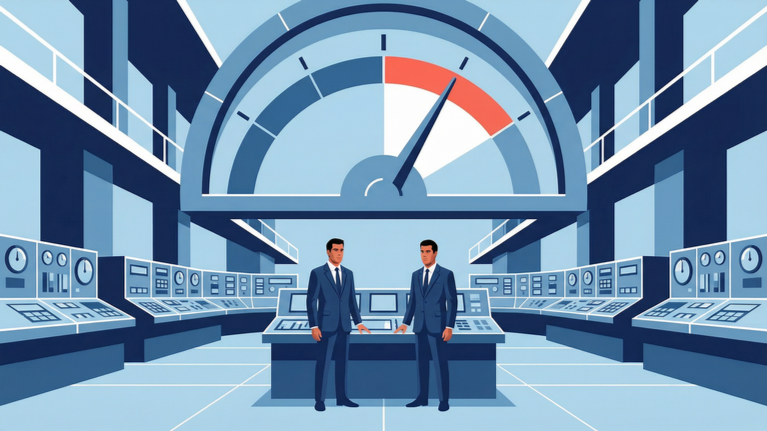
A finance review closes with a familiar conclusion. Revenue tracked close to plan. Operating expenses stayed within tolerance. Yet margins narrowed in ways no one forecasted. Leadership discussions turn quickly to hiring levels, overtime, or whether the organization expanded too quickly. Attention moves to headcount because it is visible. The cost movement that actually occurred was structural, embedded in how work is arranged rather than how many people were employed.
In many operating environments, workforce expense does not rise or fall in a smooth relationship with demand. It reacts in steps, absorbs inefficiencies quietly, and then accelerates unexpectedly. Teams compensate for process friction. Roles evolve informally. Capacity exists in places where demand no longer requires it, while other areas stretch to keep up. Financial statements capture the cost, but not the behavior that produced it.
This distinction carries real performance consequences. When workforce cost behaves structurally rather than proportionally, traditional budgeting assumptions lose predictive power. Leaders believe they are managing a variable expense when in reality they are carrying a fixed economic shape that resists adjustment. Small mismatches compound. Margin erosion rarely appears as a dramatic shift. It accumulates through thousands of operational accommodations that were never designed intentionally.
A new product line requires support roles that remain long after processes stabilize. Technology is introduced, but responsibilities built around earlier workflows persist. Managers protect service levels by adding layers of coordination rather than redesigning the work itself. Each decision made sense at the time. Taken together, they produce a cost base disconnected from how value is actually created.
“Workforce expense rarely becomes inefficient all at once. It becomes misaligned slowly, then reveals itself financially all at once.”
This is why workforce discussions framed only around hiring or reduction tend to miss the underlying issue. The economic character of labor is determined less by how many people exist inside the organization and more by how activities are structured, sequenced, and measured. Two enterprises with identical headcount can carry entirely different cost behavior depending on how responsibilities connect to demand.
The misconception persists because workforce cost is usually reviewed through an administrative lens. Headcount reports, departmental budgets, and utilization metrics describe resources, not economic design. They show where people sit, not how labor converts into productive capacity. As a result, leadership teams can spend years refining forecasts without addressing the mechanisms that drive variance.
Consider environments where demand fluctuates but roles remain static. Employees compensate through overtime during peak periods and underutilization during slower cycles. Financially, this appears as volatility. Operationally, it is a signal that capacity was never configured to move with the business. Over time, the organization begins to normalize these swings, absorbing them as the price of operating rather than recognizing them as symptoms of structural misalignment.
Work continues because it has always existed, not because it contributes meaningfully to outcomes. Technology investments sometimes amplify the problem. Automation accelerates portions of activity while adjacent functions continue unchanged, creating pockets of surplus effort that accounting systems cannot easily isolate.
“Labor becomes expensive when it is organized around history instead of current value creation.”
Leadership teams confronting these dynamics often interpret them as execution issues. They search for productivity gains or incremental efficiencies. Yet the underlying challenge is architectural. Workforce cost behaves according to design decisions made years earlier, many of which were never revisited as operating realities changed.
Understanding this behavior requires looking beyond personnel counts and into how work flows through the enterprise. Where are decisions made. Where does effort accumulate without measurable output. Which roles expand to manage complexity that could otherwise be removed. These are structural questions, not staffing ones, and they explain why financial performance can diverge from expectations even when organizations believe they are controlling labor expense.
Enterprises that realign workforce economics typically discover that the largest improvements come not from reducing people, but from repositioning effort so that labor scales naturally with demand. Cost begins to move in proportion to activity because it has been intentionally configured to do so. Financial predictability follows operational coherence.
This perspective reframes workforce discussions at the executive level. Instead of treating labor as an adjustable expense, it becomes a designed component of operating capacity. Decisions about roles, sequencing, and accountability take on financial significance equal to pricing or capital allocation. The conversation shifts from how to manage cost to how cost behaves under different conditions.
For organizations examining this transition, the relationship between workforce structure and long term financial resilience becomes more visible through disciplined evaluation of role design, capacity alignment, and operating cadence, as explored in strategic labor cost planning at
https://cityshiftfinance.com/strategic-labor-cost-planning/.
Seen through this lens, workforce investment is neither inherently fixed nor variable. It reflects choices about how work is organized to respond to demand. Enterprises that revisit those choices periodically tend to experience fewer surprises in margin performance because their labor economics remain connected to how value is produced.
It is about intentionality. Labor represents one of the few enterprise resources capable of adapting continuously, but only when its structure allows it to. Without that alignment, organizations carry cost patterns shaped by earlier eras of growth, technology, or leadership assumptions.
Executive teams evaluating financial performance often search for external explanations when margins compress or productivity stalls. Market pressure is cited. Competitive dynamics are analyzed. Yet internal operating design frequently plays an equal role, shaping how effectively the enterprise converts effort into outcomes regardless of external conditions.
Recognizing workforce cost as a designed economic behavior rather than a passive expense changes how leaders interpret performance signals. Variance becomes diagnostic information. Organizational shape becomes a financial instrument. Decisions about work allocation gain the same strategic weight as investment or pricing decisions.
The objective is not constant adjustment. It is coherence between how labor is structured and how the enterprise generates value. When that coherence exists, workforce cost moves with purpose rather than inertia. When it does not, financial results reflect the accumulated weight of decisions no longer aligned with present realities.
Executives rarely lack data about their workforce. They lack a view of how that workforce behaves economically. Bridging that gap transforms labor from an unpredictable burden into an intentional driver of operating performance.
This Article Is Part of a Larger Series
Access the complete Workforce Economics collection.

We work with leadership teams to connect resource choices, operating commitments, and the decision rights that determine whether a budget holds in practice.
Learn More
The quarterly review shows no immediate concern.Headcount is stable. Overtime has declined since last year. Department leaders confirm that schedules are f...
Get started
When Labor Costs Do Not Move With Revenue The quarterly review begins with what appears to be stable performance. Revenue has held within forecast range. D...
Get started