
03 – How Hotel Spa Retail Labor Exceeds the Revenue It Produces
The spa retail area generated $87,000 in product sales in the prior year. The spa director presented the number as a meaningful revenue contributor. When t...
Get started
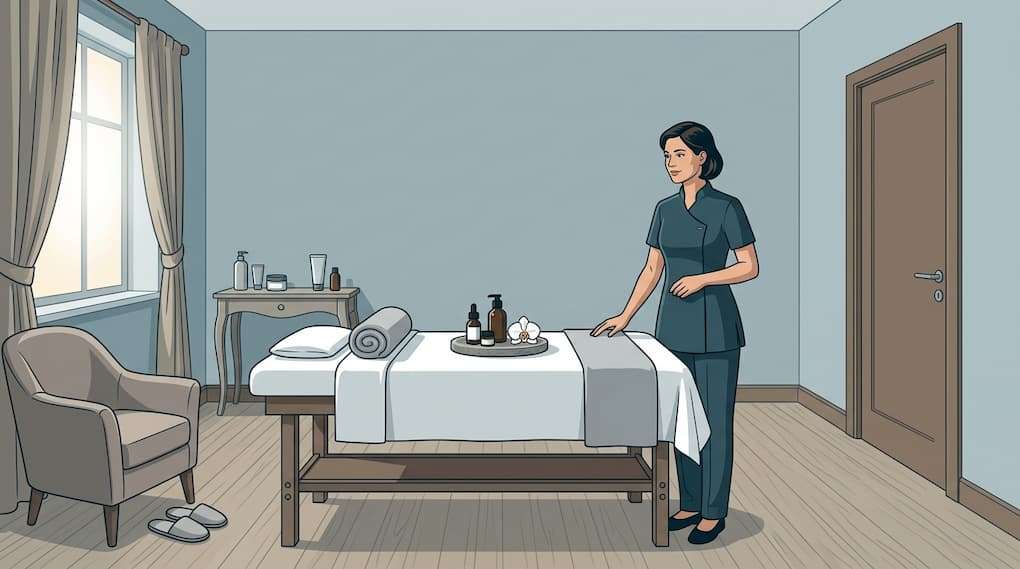
The spa director scheduled 6 therapists for Saturday based on the prior 4 Saturdays averaging 82% treatment room utilization. This Saturday ran at 61% because a large group in-house had a 7:00 AM golf tee time and a dinner commitment that absorbed most of the day. The therapist schedule could not be reduced at that point. All 6 therapists worked their full shifts. 3 of them completed 2 treatments each in an 8-hour day. The labor cost for those 18 hours of unproductive time was $486. That $486 appeared nowhere in the spa financial report as a scheduling-decision cost. It appeared as ordinary therapist wages.
Hotel spa demand is variable in ways that therapist scheduling cannot easily absorb. The booking commitments that create therapist schedules are made before the guest behavior that determines actual demand is fully known.
Hotel spa appointments are typically booked 24 to 72 hours in advance. Therapist schedules are set on a weekly basis, often 5 to 7 days ahead. The schedule is built on projected demand. The projected demand is based on historical patterns, occupancy forecasts, and group bookings. When any of those inputs shift between the time the schedule is posted and the day the schedule runs, the therapist cost is locked in while the revenue adjusts to the new reality.
This is the structural source of the fixed cost problem. The commitment is made before the demand is certain. In most hotel departments, that gap between schedule commitment and actual demand is manageable because the labor involved is hourly and can be released on short notice. In the spa, releasing a therapist who has been scheduled for a Saturday shift on 5 days’ notice is operationally unusual and in many cases contractually complicated. The therapist comes in. The treatments may not.
“We knew by Thursday that the group wasn’t going to use the spa. The therapist schedule was already posted. We couldn’t pull it back.”

We help hotels control labor costs by connecting staffing, productivity, forecasting, budgets, and department-level workforce decisions to changing property demand while protecting service quality.
Learn MoreHotel occupancy forecasts are available to spa scheduling decision-makers but are rarely used as a direct scheduling input. A spa director scheduling therapists for the coming week has access to the hotel’s booking pace, group manifest, and occupancy projection. The connection between that information and the therapist schedule requires someone to deliberately make it. In hotels where the spa operates as a standalone function with limited integration into the broader rooms and revenue management conversation, that connection is rarely made.
A hotel forecasting 58% occupancy for Tuesday with no groups in-house and a primarily business transient guest mix should produce a spa therapist schedule that reflects the low spa engagement those conditions historically generate. A hotel that schedules Tuesday’s therapists against the prior Tuesday’s actual utilization without adjusting for the different demand conditions the coming Tuesday will present is building a fixed cost against variable demand without the analytical connection that would allow the schedule to reflect the demand.
The financial discipline of connecting occupancy forecasts, group manifests, and historical spa engagement rates by guest segment to therapist scheduling decisions is not operationally complex. It requires the integration of information that exists in different systems within the hotel but is never brought together for the purpose of making a spa labor decision. That integration is what hotel amenity labor cost and demand forecasting produces when spa scheduling is treated as a financial decision rather than a calendar management task.
“The rooms team had the occupancy data. The spa had the therapist schedule. Nobody was connecting them until the margin problem got bad enough to force the conversation.”
A spa therapist schedule that is posted without reference to the hotel’s occupancy forecast, group business, and guest segment mix is a schedule built on historical averages applied to conditions that may look nothing like the averages. Hotels that make the connection between those demand inputs and the therapist schedule find that the fixed cost of unproductive therapist hours reduces materially, not because they employ fewer therapists, but because the schedule is calibrated to the demand the hotel is actually expecting rather than the demand the prior period happened to produce.
This Article Is Part of a Larger Series
Access the complete Hotel Labor Series
The spa retail area generated $87,000 in product sales in the prior year. The spa director presented the number as a meaningful revenue contributor. When t...
Get started
The spa had grown from 4 treatment rooms to 8 over 3 years as the hotel invested in expanding the amenity. The supervisory structure had expanded with it: ...
Get started