01 – Why Hotel Public Area Labor Cost Is Invisible in Most Reporting
The hotel’s monthly labor cost report showed housekeeping, front office, F&B, engineering, and security as distinct department lines. Public area...
Get started
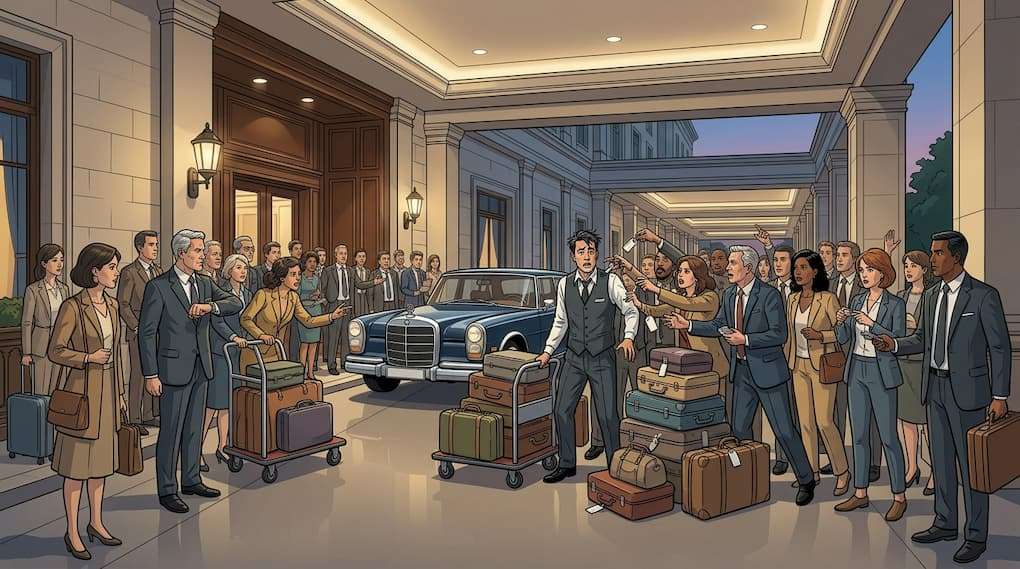
The hotel hosted a 3-day industry conference. 800 registered attendees. The public area staffing model had been built for the hotel’s standard operating conditions. During the conference, lobby traffic was 6 times the daily average. Corridor cleaning frequency needed to double to maintain the standard. Restroom attendants required near-continuous coverage across all public restrooms. Elevator lobbies required hourly cleaning rather than the standard 4-hour cycle. The public area team absorbed 3 full days of demand that the standard staffing model was not built to handle. Additional staff were called in. Shifts were extended. Overtime was generated. None of the additional cost appeared in the conference P&L.
Hotel public area staffing models are built for standard operating conditions. High-traffic event periods generate demand that the standard model cannot absorb without premium coverage, and that premium coverage is never attributed to the events that cause it.
Hotel public area cleaning standards are expressed as frequencies: lobbies cleaned every 2 hours, corridors inspected every 4 hours, restrooms serviced every hour during operating hours. Those frequencies are calibrated to the traffic the spaces receive during standard hotel operations. When an 800-person conference brings 6 times the standard lobby traffic through the hotel over 3 days, the cleaning frequency required to maintain the same standard is materially higher. Not because the cleaners are less efficient, but because the soil load generated by 6 times the normal traffic accumulates at 6 times the normal rate.
A public area team staffed to clean the lobby every 2 hours under standard conditions needs to clean it every 20 minutes to maintain the same standard during an 800-person conference. The labor required to sustain that frequency for 3 days exceeds the standard staffing model’s capacity by a significant multiple. The additional labor comes from overtime, from call-ins, and from staff pulled from other departments. All of those costs are real. None of them appear as conference-attributed expenses.
“We maintained the lobby standard throughout the conference. What we couldn’t explain to ownership was why public area labor was 340% over budget for those 3 days. The conference was in a different budget entirely.”

We help hotels control labor costs by connecting staffing, productivity, forecasting, budgets, and department-level workforce decisions to changing property demand while protecting service quality.
Learn MoreBeyond the during-event staffing requirement, major hotel events generate public area labor cost in 2 additional windows that are structurally invisible. Pre-event preparation includes deep cleaning the spaces the event will use, setting up any public area elements that are part of the event environment, and restoring spaces that were in standard condition to the elevated standard the event requires. Post-event restoration includes returning all affected public spaces to standard condition, addressing any damage or soiling the event generated, and completing any maintenance that was deferred during the event period.
Both windows generate real public area labor hours that are event-caused and not event-attributed. A 3-day conference generating 6 hours of pre-event public area preparation and 8 hours of post-event restoration has produced 14 labor hours that belong in the conference cost analysis. At a blended rate of $22 per hour, that is $308 of public area labor cost the conference generated and the conference P&L never absorbed.
Building public area event labor attribution requires identifying 3 cost components for each major event: the incremental during-event coverage above the standard model, the pre-event preparation labor, and the post-event restoration labor. The sum of those 3 components is the public area cost the event generated. It belongs in the event P&L alongside F&B, AV, and room rental. Hotels that have built that attribution find that their event pricing has been systematically underestimating total event cost by the public area labor the event consumed. This is the complete event cost accounting that hotel event cost attribution across operating departments requires to produce event P&Ls that reflect the true financial cost of the business the hotel is booking.
“When we built the 3-component public area cost model for events, the conference that had looked like one of our best revenue days of the year looked considerably different. The margin was real but substantially lower than the standard event report had shown.”
A hotel public area budget that shows consistent labor spikes during major event periods without attributing those spikes to the events that generated them is subsidizing its event business with operational labor cost. The subsidy is real, it is recurring, and it grows as the event calendar grows. Hotels that complete the attribution find both a more accurate event P&L and a more defensible public area budget. Neither report was telling the complete financial story before the attribution was built. Both do once it is.
This Article Is Part of a Larger Series
Access the complete Hotel Labor Series
The hotel’s monthly labor cost report showed housekeeping, front office, F&B, engineering, and security as distinct department lines. Public area...
Get started
The hotel ran a lobby attendant from 6:00 AM to 11:00 PM daily. The attendant managed cleanliness, guest queries, and general lobby presentation. On a Satu...
Get started