test
A proactive approach to geopolitics he hotel’s kitchen operated as a unified cost center serving the restaurant, the bar, room service, and all banquet eve...
Get started
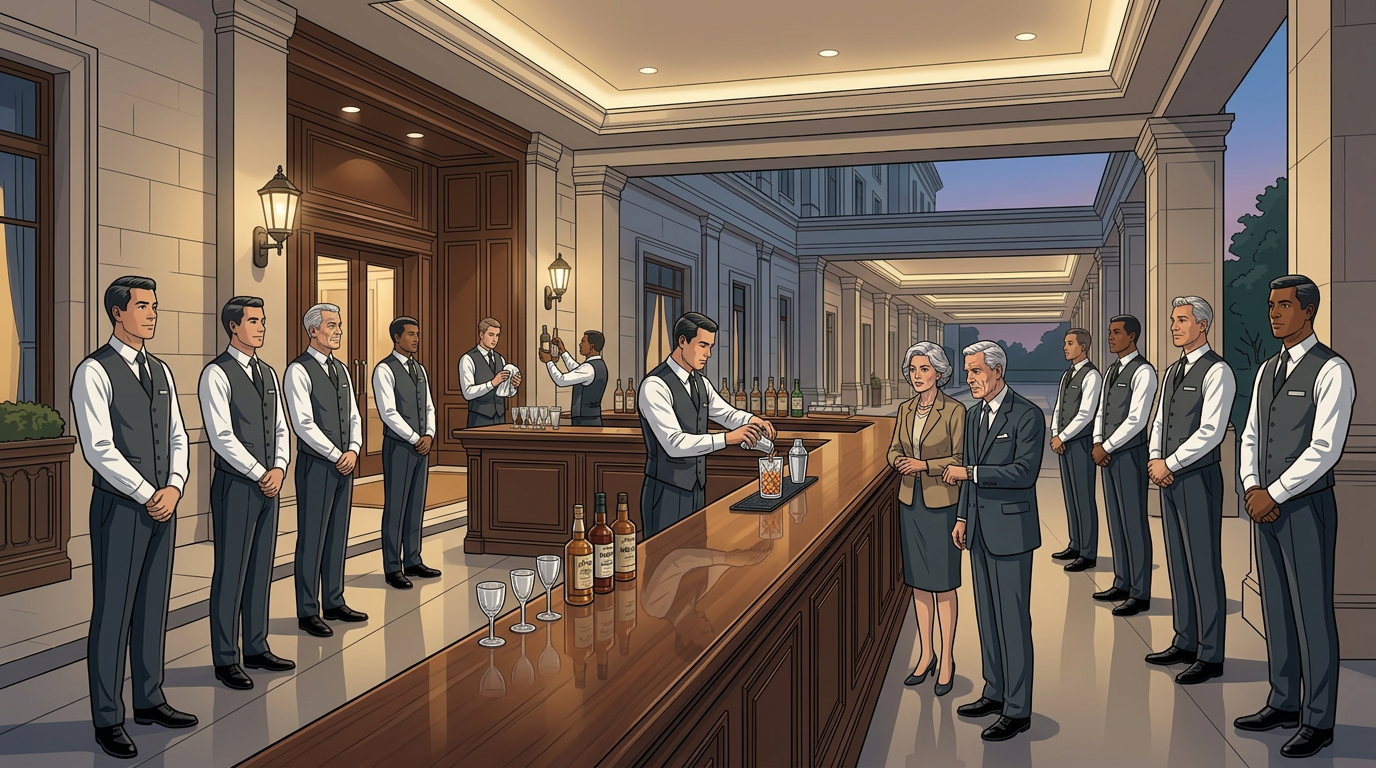
The hotel bar averaged 34 covers per evening shift across the prior month. The staffing model was built on that average: 1 bartender and 1 bar back for the evening shift, confirmed as adequate for 34 covers at the hotel’s standard service pace. On the 4 evenings during the month when the hotel hosted events bringing 150 or more guests through the lobby, the bar served an average of 118 covers. The 2-person team was overwhelmed on each of those evenings. Service slowed. Guests left. Revenue was lost. The additional staffing cost of adding a bartender on those 4 evenings would have been $480. The lost beverage revenue on those evenings, estimated from cover count and average beverage spend, was approximately $3,200.
Hotel bar staffing built on cover averages is calibrated to the midpoint of the hotel’s demand range and structurally inadequate for the peaks that event programming creates.
A 34-cover evening average across 30 days includes 4 evenings at 118 covers, 18 evenings at 22 to 35 covers, and 8 evenings at 12 to 20 covers. The average is mathematically accurate. It is operationally useless as a staffing input because bar demand in a hotel does not distribute itself evenly across evenings. It concentrates on event nights, on weekend evenings, and on specific calendar periods that the hotel’s event programming and occupancy mix determine. A staffing model built on the average is simultaneously overstaffed for the low-demand evenings and understaffed for the high-demand ones.
The financial consequence runs in both directions. On low-demand evenings, the 2-person team is generating bartender labor cost against 15 to 20 covers that 1 bartender could manage without service degradation. On event evenings, the 2-person team is losing revenue it cannot capture because it does not have the capacity to serve the demand in front of it. The average-based model produces 2 distinct financial inefficiencies that the average itself makes invisible.
“The staffing model looked right on paper. 34 covers, 2 people. On event nights we were turning away beverage revenue we should have captured. On quiet nights we were overpaying for capacity we didn’t need.”

We work with leadership teams to connect resource choices, operating commitments, and the decision rights that determine whether a budget holds in practice.
Learn MoreHotel bar staffing should be built against the event calendar and the reservation system rather than against a trailing cover average. A bartender added for a Wednesday evening with a 180-person corporate dinner in the hotel generates labor cost of approximately $120 for the additional shift coverage and revenue opportunity from 80 to 100 additional beverage covers that the understaffed model cannot capture. The financial return on the additional staffing is immediate and measurable in the shift’s revenue performance.
Building hotel bar staffing against the event calendar requires the event operations team and the bar manager to share the same information in the same planning window. The event coordinator knows what is booked. The bar manager builds the staffing from that knowledge rather than from a trailing average that tells them what happened last month rather than what will happen tomorrow. Hotels that have made that connection find that the bar’s revenue performance on event nights improves and that the labor cost on quiet nights compresses simultaneously. This is the event-to-staffing integration that hotel bar labor deployment and event calendar planning produces when the bar is treated as a demand-responsive operation rather than as a fixed-coverage service.
“Once we started building the bar schedule from the event calendar, we stopped being understaffed on the nights that mattered and overstaffed on the nights that didn’t. Both problems had the same cause.”
A hotel bar staffing model that cannot differentiate between a 15-cover Tuesday and a 118-cover event Wednesday is not a staffing model. It is a fixed coverage convention that produces predictable underperformance on event nights and predictable overspending on quiet ones. The financial cost of both conditions is measurable and recoverable through a scheduling approach that treats the event calendar as its primary input rather than as background context.
This Article Is Part of a Larger Series
Access the complete Hotel Labor Series
A proactive approach to geopolitics he hotel’s kitchen operated as a unified cost center serving the restaurant, the bar, room service, and all banquet eve...
Get started
Labor is rarely treated as a designed economic system. It is managed operationally, reviewed periodically, and adjusted reactively. Yet for many organizati...
Get started