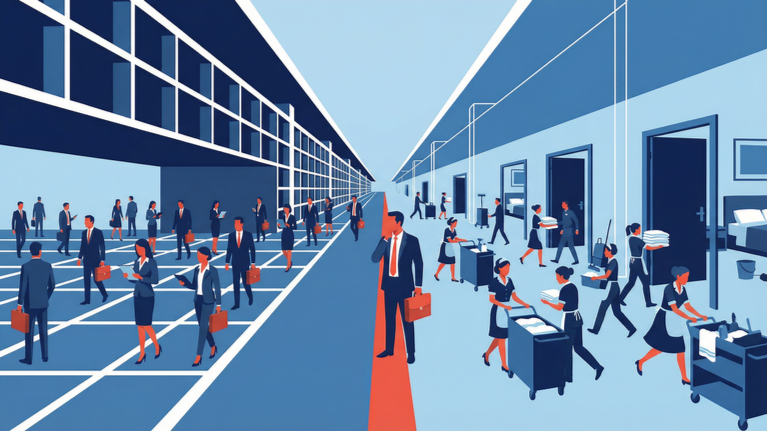
Article 09 – Why Housekeeping Labor Behaves Differently Than Any Hotel Department
The housekeeping budget had been set the same way for six consecutive years. A rooms-per-housekeeper standard was established based on the prior year’...
Get started
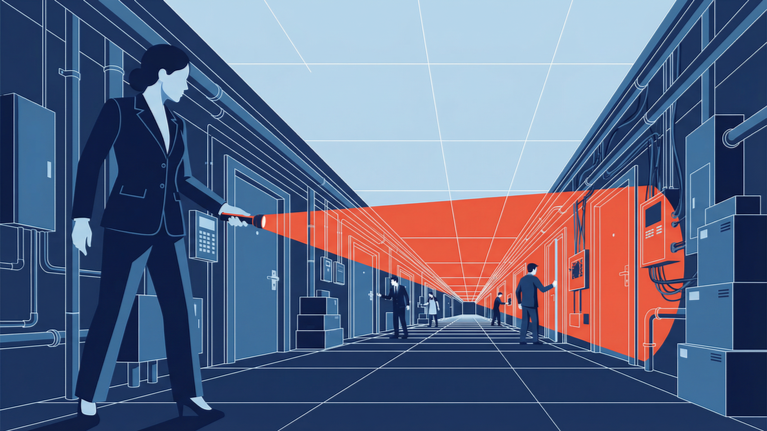
Nobody was watching the back of house labor report.
Not because leadership did not care about cost control. Because the report did not exist in a form that made back of house labor visible as a distinct financial category. Kitchen prep, laundry, housekeeping support, maintenance, and public area cleaning were embedded across multiple departmental budgets in ways that made aggregate analysis impossible without manual consolidation that nobody had time to perform.
The front desk overtime that appeared on Monday’s report received immediate attention. The forty hours of idle kitchen prep time that accumulated every week because delivery schedules did not align with shift start times appeared nowhere at all.
Back of house labor represents twenty to thirty percent of total hotel labour spend in most full-service properties. It receives a fraction of the analytical attention that front of house labor receives because its connection to guest experience is less direct and its cost consequences are less visible in the operational metrics leadership reviews most frequently.
Front of house labor failures appear quickly in guest satisfaction scores, service time measurements, and complaint data. A front desk queue during peak check-in produces immediate feedback. An understaffed restaurant during Saturday dinner service generates complaints that appear in review platforms within hours.
Back of house labor failures accumulate more slowly and express themselves through different channels. Kitchen prep inefficiency increases food cost through waste and rushed preparation that affects quality without appearing in a labor metric. Laundry scheduling misalignment produces linen shortages that housekeeping absorbs through workarounds that inflate their labor cost without the cause ever being identified as a laundry scheduling problem. Maintenance idle time appears as deferred work orders that eventually produce guest complaints attributed to property condition rather than workforce deployment.
“Back of house labor was the cost we managed least carefully because it was the furthest from the guest. That was exactly backwards. It was the foundation everything else ran on, and when it was inefficient the consequences showed up everywhere except on the back of house labor report.”

The most significant structural change available to properties seeking to improve back of house labor efficiency is the shift from time-based to task-based scheduling.
Time-based scheduling assigns back of house staff to fixed shift hours. An eight-hour shift begins at six in the morning and ends at two in the afternoon regardless of when the work that shift is meant to accomplish is actually available to be done. Kitchen prep staff arriving at six cannot begin preparation work until the seven-thirty delivery arrives. Laundry attendants starting at seven cannot process the morning’s checkout linen until housekeeping begins collecting it after nine. The labor hours between shift start and work availability are paid and unproductive.
Task-based scheduling assigns staff to specific work requirements and schedules their arrival based on when that work is actually available. Task-based scheduling as a discipline within hotel labor management consistently produces the most significant back of house efficiency gains of any single operational change.
Kitchen prep staff scheduled to arrive thirty minutes after delivery rather than ninety minutes before it eliminates idle time without changing a single food preparation standard. Laundry attendants scheduled in waves aligned with housekeeping checkout patterns process linen continuously rather than waiting for volume to accumulate. Maintenance technicians scheduled against specific preventive maintenance work orders complete defined tasks rather than filling shift hours with reactive responses to whatever surfaces during the day.
Maintenance labor sits in a particularly invisible position within most hotel back of house cost structures. It is typically managed through a combination of reactive response to guest complaints and equipment failures, and planned preventive maintenance that is scheduled based on manufacturer recommendations rather than operational demand patterns.
Reactive maintenance labor is inherently inefficient because it concentrates demand unpredictably and requires technicians available for deployment at any moment rather than scheduled against known work. Properties that rely heavily on reactive maintenance carry higher maintenance labor cost than those with strong preventive maintenance programs not because reactive labor costs more per hour but because it requires more total hours to address the same volume of maintenance work.
“Preventive maintenance felt like overhead until we calculated what reactive maintenance was actually costing us in labor hours, guest recovery, and accelerated equipment replacement. The preventive program paid for itself in the first quarter.”
Public area cleaning and maintenance in full-service and casino hotel properties represents a consistently under-optimized labor category because it is managed through fixed schedules that do not reflect how foot traffic actually distributes across the property throughout the day.
Casino floors, lobbies, restaurant approaches, and pool areas experience significantly different traffic volumes at different times of day. Fixed cleaning schedules that deploy the same number of staff at eight in the morning and two in the afternoon produce overstaffing during low-traffic periods and understaffing during peak periods when visible cleanliness has the highest impact on guest perception.
Aligning public area labor schedules with actual traffic pattern data reduces total labor hours without reducing the cleanliness standards guests experience during the periods when they are most likely to form opinions about the property.
The housekeeping budget had been set the same way for six consecutive years. A rooms-per-housekeeper standard was established based on the prior year’...
Get started
The F&B director had inherited a staffing model built outlet by outlet. The restaurant had its own team. The bar had its own team. Room service ran a s...
Get started