04 – When Hotel Cafe Supervisory Cost Grows Beyond What the Outlet Can Support
The hotel coffee shop generated $672,000 in annual revenue. It was managed by a coffee shop supervisor reporting to the F&B manager, with a lead barist...
Get started
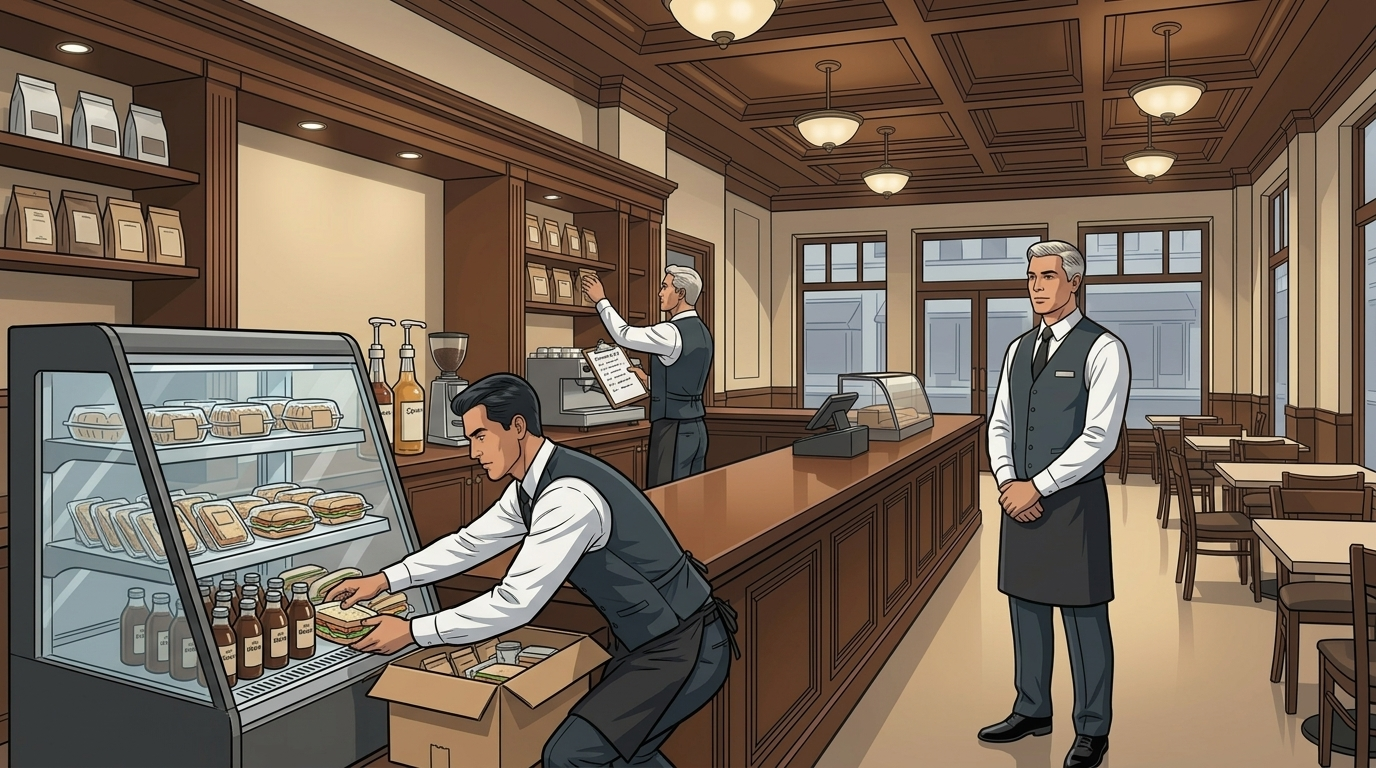
The hotel coffee shop added a grab-and-go display case offering pre-packaged sandwiches, salads, fruit cups, and snacks. The addition was presented as a revenue enhancement that would increase average transaction value and capture hotel guests who wanted a quick meal without visiting the restaurant. The display generated $320 in average daily food sales. The labor required to stock it each morning, rotate inventory, manage the cold chain, handle expired product, and process food transactions added approximately 45 minutes of daily labor at a cost of $17.25. Before food cost at a 40% rate, the grab-and-go program was generating $192 in daily gross margin against $17.25 in direct labor. After food cost the contribution was $174.75. The program appeared modestly profitable in isolation.
What the calculation did not include was the indirect labor impact of the grab-and-go program on the primary coffee service operation. Adding food to a coffee counter creates service complexity that slows transaction processing, generates food safety compliance requirements, and introduces an inventory management burden that a pure beverage operation does not carry.
A hotel coffee counter operating as a pure beverage service processes transactions at a pace set by drink preparation time. A customer ordering a coffee completes their transaction in 60 to 90 seconds of service interaction. A customer selecting a grab-and-go item, asking about contents, requesting heating, or combining a food item with a beverage order extends the average transaction time. During the morning peak when transaction volume is highest and throughput matters most, the food component adds friction to the counter that the revenue it generates may not justify.
A grab-and-go program that adds 15 seconds of average transaction time during a 90-minute morning peak serving 80 customers adds 20 minutes of effective service time to the peak window. That 20 minutes, distributed across the barista team, represents additional labor demand that the grab-and-go revenue does not directly compensate. The throughput impact is real. It is never captured in the grab-and-go revenue analysis because it appears as reduced morning peak efficiency rather than as a cost attributable to the food program.
“The grab-and-go looked profitable when we calculated food margin against direct stocking labor. When we factored in the morning peak slowdown it was causing, the picture changed.”

We help hotels control labor costs by connecting staffing, productivity, forecasting, budgets, and department-level workforce decisions to changing property demand while protecting service quality.
Learn MoreHotel coffee shops that add food to their offering take on a food safety compliance burden that a pure beverage operation does not carry. Temperature checks, expiry date management, FIFO rotation, waste logging, and periodic deep cleaning of the display case are all labor requirements that exist because the food is there. None of those compliance activities generate revenue. All of them generate labor hours that appear in the coffee shop’s operating cost.
Calculating the true labor cost of a hotel grab-and-go program requires adding the direct stocking and inventory management labor to the compliance overhead labor, adding the throughput impact cost during the morning peak, and placing the total against the grab-and-go revenue. Hotels that have built that complete calculation find that grab-and-go programs in hotel coffee shops are frequently less profitable than the food margin calculation suggests and, in some cases, generate a net labor cost against the revenue they produce. That finding changes decisions about the scope of the food offering, the hours during which it is available, and whether the format serves the outlet’s financial performance or complicates it. This is the program cost completeness that hotel coffee shop food program labor cost and revenue review produces when indirect labor and compliance costs are included alongside direct stocking labor.
“We ran the complete grab-and-go labor calculation for the first time. The net contribution after all labor, including the throughput impact, was about half what the food margin alone had suggested.”
A hotel coffee shop grab-and-go program that generates modest food margin but adds meaningful labor overhead through stocking, compliance, and throughput impact is not enhancing the outlet’s financial performance. It is adding operational complexity against a revenue contribution that the full cost of providing it does not justify. Hotels that evaluate the complete labor cost of their food offering, not just the direct stocking hours, make different decisions about which food items to carry, in what quantities, and whether the format belongs in a high-throughput morning coffee operation or in a separate format better designed to handle food service.
This Article Is Part of a Larger Series
Access the complete Hotel Labor Series
The hotel coffee shop generated $672,000 in annual revenue. It was managed by a coffee shop supervisor reporting to the F&B manager, with a lead barist...
Get started
The hotel coffee shop served an average of 94 transactions per day. The hotel averaged 312 occupied rooms per day across the same period, with an average g...
Get started