
04 – When Hotel Spa Supervisory Cost Grows Beyond What Utilization Supports
The spa had grown from 4 treatment rooms to 8 over 3 years as the hotel invested in expanding the amenity. The supervisory structure had expanded with it: ...
Get started
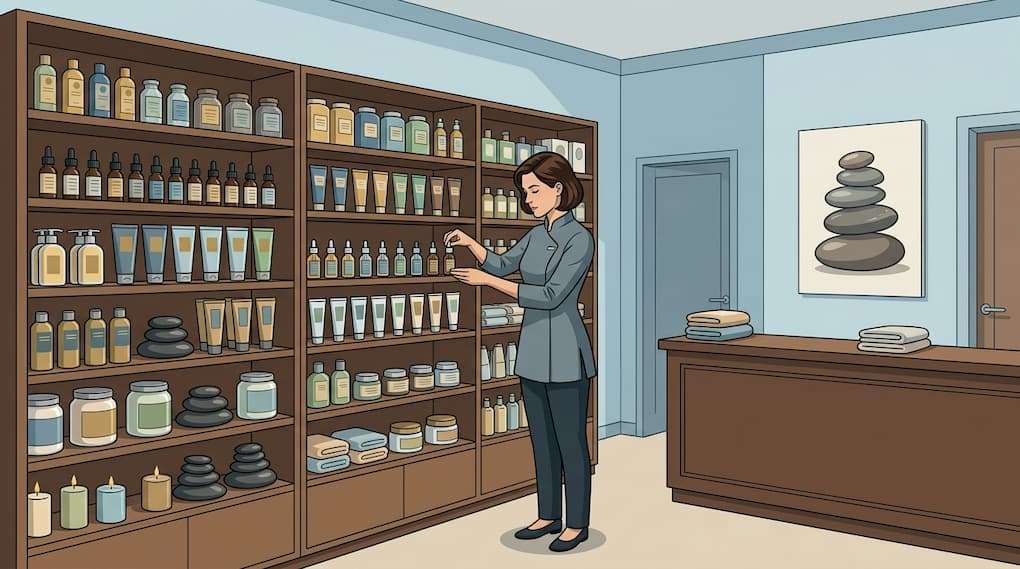
The spa retail area generated $87,000 in product sales in the prior year. The spa director presented the number as a meaningful revenue contributor. When the director of finance asked what it cost to generate that revenue, the conversation became uncomfortable. Nobody had calculated it. The retail area required a staff member to manage inventory, merchandise products, handle transactions, and provide product recommendations to guests. That staff member’s cost, including benefits, appeared in the spa labor line alongside therapist wages. The retail revenue appeared as a separate line. Nobody had placed them in ratio.
Hotel spa retail generates revenue that is visible and labor cost that is invisible. The 2 numbers are almost never examined in relationship to each other.
A hotel spa with a dedicated retail function is operating a small retail business within a treatment business. The retail business requires inventory management, visual merchandising, product knowledge training, transaction handling, and in many cases a dedicated staff presence during spa operating hours. None of those activities generate treatment revenue. All of them generate labor cost. When that labor cost sits in the same budget line as therapist wages, the retail function’s true financial contribution is invisible.
ISPA data shows that retail sales in hotel spas typically represent 15% to 30% of total spa service revenue. That range makes retail sound like a meaningful contributor. The labor cost of staffing and managing the retail function reduces that contribution materially. A spa generating $87,000 in retail revenue against $34,000 in directly attributable retail labor cost is producing a net retail contribution of $53,000 before product cost. After product cost at a typical retail margin of 50%, the net margin contribution from retail is approximately $9,500. That is a very different number from the $87,000 the revenue line suggests.
“The retail number looked strong every month. It was only when we built the retail P&L properly that we understood we were working very hard for a very small net contribution.”

We help hotels control labor costs by connecting staffing, productivity, forecasting, budgets, and department-level workforce decisions to changing property demand while protecting service quality.
Learn MoreEffective hotel spa retail requires staff who can speak to the products with enough knowledge to create purchase intent in a guest who has just completed a treatment. That knowledge does not come automatically. It requires training investment, product education sessions, and ongoing updates as the retail range changes. The cost of that training is absorbed into general spa labor without attribution to the retail function it serves.
When a therapist spends 10 minutes with a post-treatment guest discussing retail products and achieves a conversion, the retail sale appears in the revenue line. The 10 minutes of therapist time that generated it appears in therapist wages. If that therapist’s post-treatment retail engagement reduces their availability for the next treatment booking, the labor cost of the retail function includes not just the direct retail staff time but the opportunity cost of therapist time applied to retail rather than treatments. That opportunity cost is real. It never appears in any spa financial report.
Calculating the true net contribution of hotel spa retail requires attributing all directly associated labor, staff time for inventory management, merchandising, transactions, and therapist retail engagement, against the gross retail margin that labor produces. The resulting number tells a materially different story than the retail revenue line. Hotels that have performed that calculation consistently find the retail function contributes less than the revenue suggests and, in some cases, generates a net cost when fully attributed. That analysis requires the layered cost attribution that hotel spa and wellness financial analysis applies when a department’s revenue streams are separated from each other rather than reported in aggregate.
“When we separated retail labor from treatment labor and built a standalone retail P&L, the decision about how much floor space and staff time to dedicate to retail changed completely.”
A hotel spa retail revenue line of $87,000 is not a margin number. It is a gross revenue number that carries hidden labor cost, product cost, and in some cases opportunity cost that combine to produce a net contribution that may be a fraction of the headline. Hotels that build the full retail P&L make different decisions about the scale of their retail offering, the staff time they invest in it, and the treatment room space they allocate to retail display versus productive treatment capacity.
This Article Is Part of a Larger Series
Access the complete Hotel Labor Series
The spa had grown from 4 treatment rooms to 8 over 3 years as the hotel invested in expanding the amenity. The supervisory structure had expanded with it: ...
Get started
The spa launched a local membership program to build a stable recurring revenue base and reduce dependence on hotel guest demand. 180 members enrolled at $...
Get started