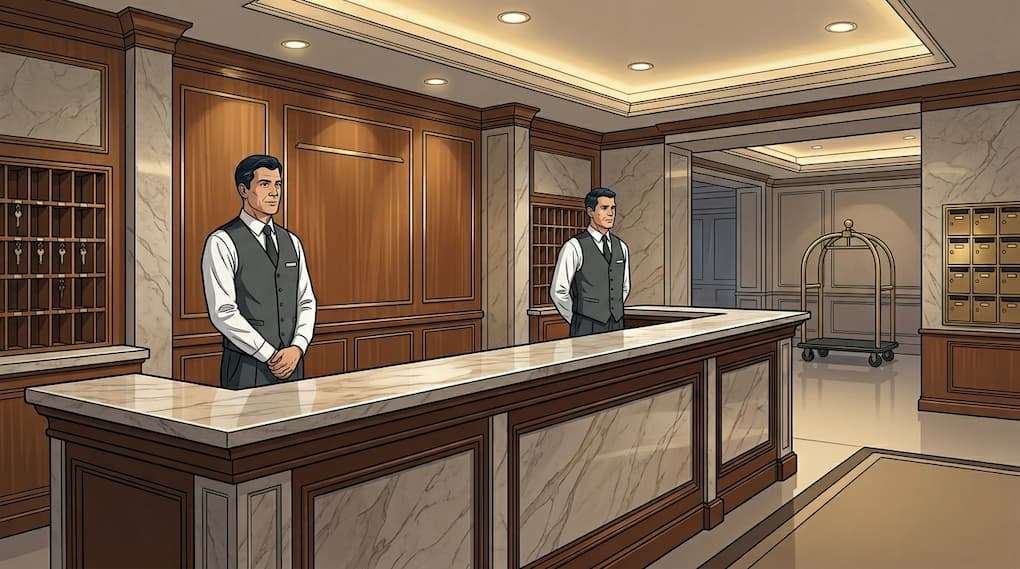
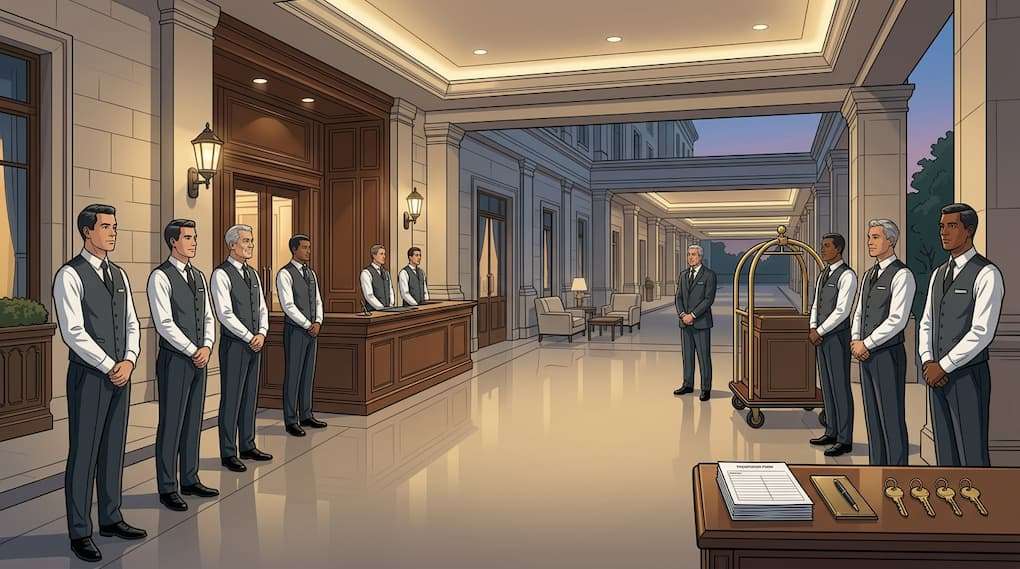
The concierge desk was staffed with 2 agents from 7:00 AM to 11:00 PM, 7 days a week. The staffing had been set when the hotel opened and had not been formally reviewed since. Guest request volume was logged in a paper interaction sheet that nobody analyzed. On weekday mornings between 9:00 AM and 11:00 AM, the desk handled an average of 4 interactions per hour across both agents. On Friday and Saturday evenings between 6:00 PM and 9:00 PM, the same desk handled an average of 31 interactions per hour with the same staffing. The coverage model had been built on convention, not on demand.
Concierge staffing in hotels is typically set on a coverage basis rather than a demand basis. The cost of that approach is idle labor during low-demand periods and inadequate coverage during predictable peaks.
Convention Is Not a Staffing Model
A concierge desk that has been staffed the same way since the hotel opened is not being staffed to demand. It is being staffed to an assumption about what coverage should look like that has never been tested against what guest behavior actually requires. The assumption may have been reasonable at opening. Guest mix changes. Programming changes. The ratio of leisure to business travelers shifts. Events generate demand spikes. Weekday business travel patterns differ from weekend leisure patterns. None of those changes trigger a staffing review when the model is built on convention.
The financial consequence of convention-based concierge staffing is predictable. Weekday mornings carry 2 agents against 4 hourly interactions. Friday evenings carry 2 agents against 31 hourly interactions. The first condition generates idle labor cost. The second generates service failures and the labor cost of recovery. Both are produced by the same staffing decision that was never reviewed against actual demand.
“We’d been staffing the desk the same way for 6 years. When we finally pulled the request logs and mapped them by hour and day, we understood immediately why we had the satisfaction scores we had on weekend evenings.”
The Hidden Cost of Both Failure Modes
Idle concierge coverage costs money every hour it runs. 2 agents averaging 4 interactions per hour between them are spending the majority of their paid time on non-interaction activity. That is not inherently wrong. Concierge agents need availability to respond to requests. But when that availability is concentrated during periods when guest demand genuinely does not materialize, the coverage is generating cost against a service requirement that does not exist at that scale.
Understaffed coverage during peak periods generates a different cost. A concierge desk that cannot service 31 hourly interactions with 2 agents creates queues, delays, and service failures. Those failures generate guest compensation, satisfaction score deterioration, and the management time required to respond to complaints. None of those costs appear in the concierge labor budget. They appear in hospitality credits, loyalty adjustments, and leadership time absorbed across departments without connection to the staffing decision that produced the failure.
Tracking concierge request volume by hour, day of week, and guest segment produces a staffing input that convention cannot provide. Hotels that build their concierge coverage model around actual demand patterns rather than around fixed shift structures find both cost conditions simultaneously improve. Idle coverage reduces. Peak coverage increases. The total labor cost may not change significantly. The service outcome and the financial efficiency of the department change substantially. This is the demand-to-staffing connection that hotel labor cost management at the department level is designed to make systematic.
“Once we matched staffing to actual request volume by hour, we stopped overpaying during slow periods and stopped failing guests during busy ones. The total labor cost barely moved.”
What the Request Log Is Telling the Staffing Model
A concierge request log that has never been analyzed is a staffing decision that has never been made on evidence. Hotels that treat guest request volume as the primary input for concierge coverage decisions, rather than as a record-keeping exercise, find that the coverage model the data suggests looks very different from the coverage model convention produced. The gap between those 2 models represents recoverable cost on one end and avoidable service failure cost on the other.
This Article Is Part of a Larger Series
Access the complete Hotel Labor Series