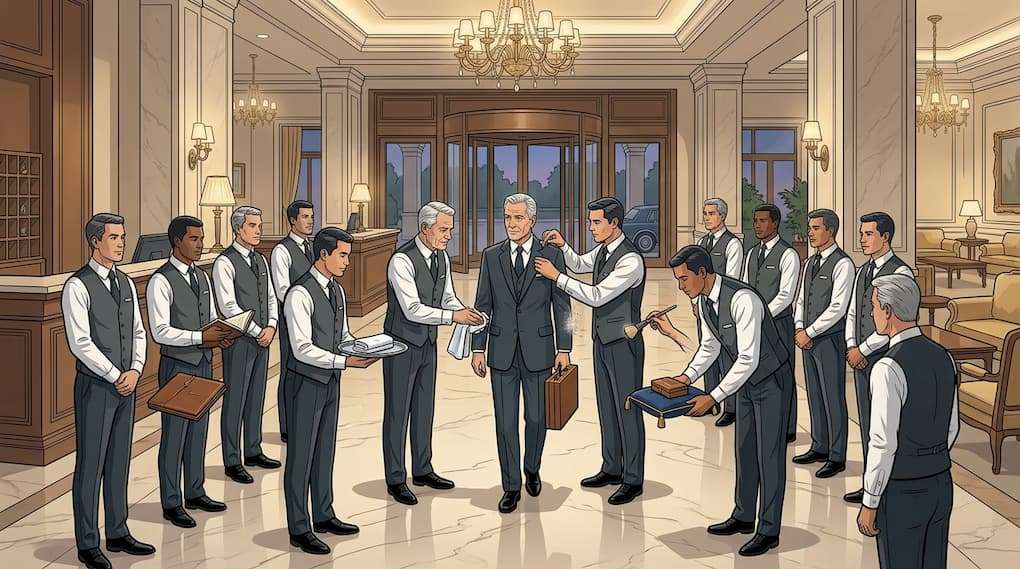
02 – Why Hotel VIP Service Cost Is Rarely Connected to the Rate It Commands
The suite was priced at $850 per night. The rate premium over a standard room was $420. That premium was meant to reflect the value of the suite product, t...
Get started
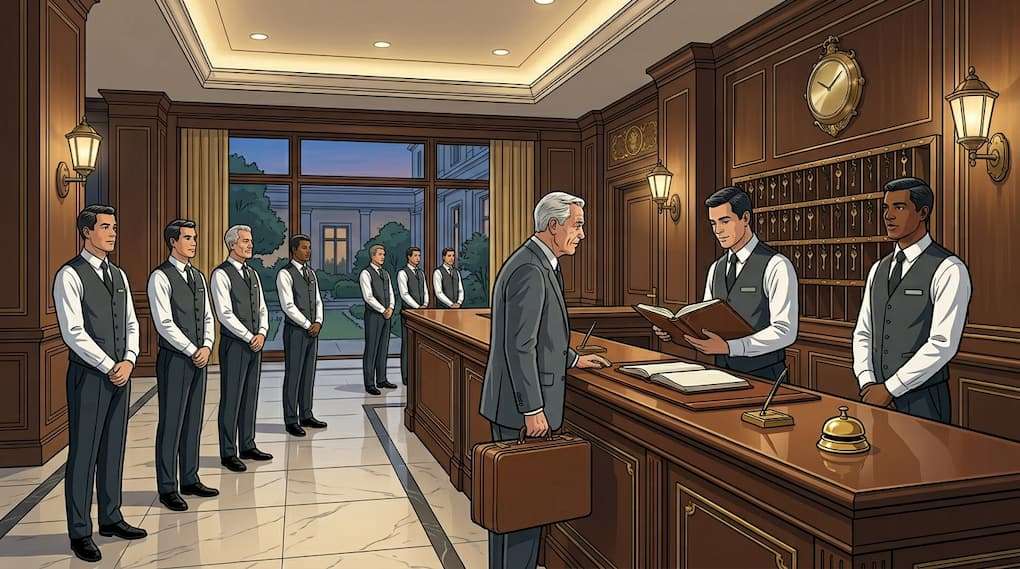
The concierge desk handled 340 guest interactions in a week. Restaurant reservations, activity bookings, transportation arrangements, and local recommendations. The team logged every interaction. What the hotel did not log was whether any of those interactions produced revenue the hotel captured, revenue a third party captured, or no incremental revenue at all. The department was measured on interaction volume and guest satisfaction scores. It was not measured on the financial return those interactions generated relative to the labor cost of producing them.
Concierge labor cost in hotels is one of the most consistently unmeasured cost lines in the building. The function is evaluated on service metrics. The financial question of whether the labor investment is justified by what it produces commercially is rarely asked.
A concierge team logging 340 weekly interactions is delivering a service. Whether that service justifies its labor cost depends on what those interactions produce financially. A reservation made at the hotel’s own restaurant generates revenue the hotel captures. A reservation made at an external restaurant generates goodwill with the guest and cost for the hotel. An activity booking through a preferred partner may generate a commission. A general recommendation generates nothing except time spent by a paid employee.
Hotels that track concierge interactions without connecting them to financial outcomes cannot answer the basic question of whether the department’s labor cost is justified. The interaction log looks productive. The revenue attribution does not exist. The gap between those 2 realities is where the cost accumulates without examination.
“We knew exactly how many guests the concierge helped every week. We had no idea how much of that help was converting into revenue we actually kept.”
Full-service hotels typically staff concierge desks with 3 to 5 positions across shifts, generating annual labor costs that range from $180,000 to $320,000 depending on wage rates and benefits. That investment is made on the assumption that concierge service drives guest satisfaction, loyalty, and incremental revenue. The satisfaction and loyalty benefits are tracked through post-stay surveys. The incremental revenue attribution is almost never tracked systematically.
A hotel with a concierge department costing $240,000 annually that can attribute $60,000 in incremental captured revenue to concierge-driven recommendations and bookings is running a service function whose financial return does not justify its cost. A hotel that cannot quantify that attribution at all is making the same $240,000 investment without any financial basis for the decision. Neither position is defensible in a serious budget conversation. Both are common.
Connecting concierge activity to financial outcome requires tracking what the department recommends, where guests follow those recommendations, and what revenue the hotel captures as a result. That level of attribution is not complex to build. It is simply not built because the concierge function has historically been evaluated as a hospitality cost rather than as a commercial investment. The financial discipline that connects departmental cost to departmental output is exactly what hotel labor management applied to guest services is designed to produce.
“The concierge team was excellent at their jobs. The question we’d never asked was what their jobs were worth in financial terms to the hotel.”
A concierge interaction log that shows high volume and strong guest satisfaction is telling a service story. It is not telling a financial story. Hotels that want both need to build the attribution layer that connects what the concierge does to what the hotel earns as a result. That connection does not need to capture every interaction. It needs to be systematic enough to establish whether the department’s labor cost is generating a commercial return that justifies its scale, and whether that scale should be adjusted based on what the return actually shows.
This Article Is Part of a Larger Series
Access the complete Hotel Labor Series

We help hotels control labor costs by connecting staffing, productivity, forecasting, budgets, and department-level workforce decisions to changing property demand while protecting service quality.
Learn More
The suite was priced at $850 per night. The rate premium over a standard room was $420. That premium was meant to reflect the value of the suite product, t...
Get started
The welcome amenity program had been running for 3 years. Arriving guests in certain room categories received a fruit plate, a handwritten note, and a bott...
Get started