05 – Why Hotel Group Arrivals Cost More Than the Block Rate Accounts For
The sales team closed a 200-room group at a rate $40 below rack. The rate was justified through volume, ancillary spend projections, and competitive positi...
Get started
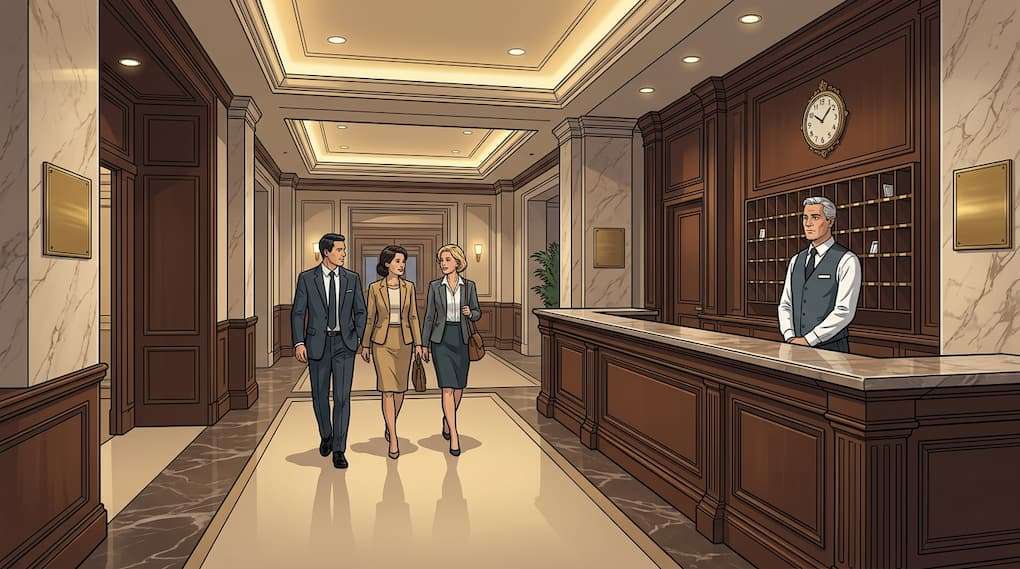
Guest checkout behavior shifted. Not dramatically and not all at once, but consistently. More departures completed digitally. More folios settled before the guest reached the desk. More keys dropped without any agent interaction. The schedule did not shift with it. The checkout window still carried the same agent coverage it had when every departure required a live transaction. The result was a department staffed for a checkout volume that no longer existed in the form that drove the original staffing decision.
This is not a technology success story. It is a cost structure problem that technology made visible by eliminating the workload that justified the headcount.
Express and digital checkout programs reduce the transaction burden on front desk agents during the morning departure window. A checkout that previously took 4 to 6 minutes of agent time becomes a background process completed before the guest leaves the room. Folio review, payment confirmation, key return, and question handling all move out of the desk interaction. The agent is available. The transaction does not materialize. The coverage assumption embedded in the staffing model remains in place even as the volume it was designed to handle decreases.
The financial consequence is idle coverage during periods that once justified their own staffing tier. Morning guest departures were historically among the most labor-intensive windows for hotel front office departments. Digital checkout does not eliminate that window. It reduces the transaction density within it while leaving the coverage structure intact. Labor cost per departure rises. Total labor cost does not fall.
“The checkout program was working. Guests were using it. Our morning desk coverage looked exactly the same as before we launched it.”

We help hotels control labor costs by connecting staffing, productivity, forecasting, budgets, and department-level workforce decisions to changing property demand while protecting service quality.
Learn MoreStaffing models are built on assumptions about guest transaction volume. When those volume assumptions change, the model should change with them. In practice, front office scheduling tends to be more conservative than responsive. Coverage is maintained at prior levels as protection against the possibility that guest technology adoption is temporary, that not all guests will use digital options, or that the morning window will still generate exceptions requiring agent handling. Those exceptions are real. The coverage required to manage them is not the same as the coverage required when every departure went through the desk.
Hotels with express checkout adoption rates above 60% are managing a fundamentally different morning checkout condition than their scheduling models were built for. The agent hours committed to the window reflect a guest transaction volume that technology has reduced. The budget reflects a prior-period staffing decision that nobody formally reviewed when guest checkout behavior changed. The gap between coverage built on prior-period assumptions and coverage calibrated to current transaction reality is where the cost lives. That is what hotel front office labor cost analysis needs to surface.
“We were still staffing for the checkout volume we had 2 years ago. The guests had stopped needing that much of us.”
Express checkout adoption is not a guest satisfaction metric. It is a labor demand signal. Hotels that track adoption rates against scheduled coverage can see the gap between what the staffing model expects and what guests are actually doing. When adoption exceeds 50% of total departures, the morning coverage decision deserves a direct review. Not as a cost-cutting exercise, but as a recognition that the guest demand condition the schedule was built to service has changed in a measurable and permanent way.
This Article Is Part of a Larger Series
Access the complete Hotel Labor Series
The sales team closed a 200-room group at a rate $40 below rack. The rate was justified through volume, ancillary spend projections, and competitive positi...
Get started
The front office supervisor submitted the 4th resignation of the quarter on a Friday afternoon. By Monday the department was running a vacancy, a new hire ...
Get started